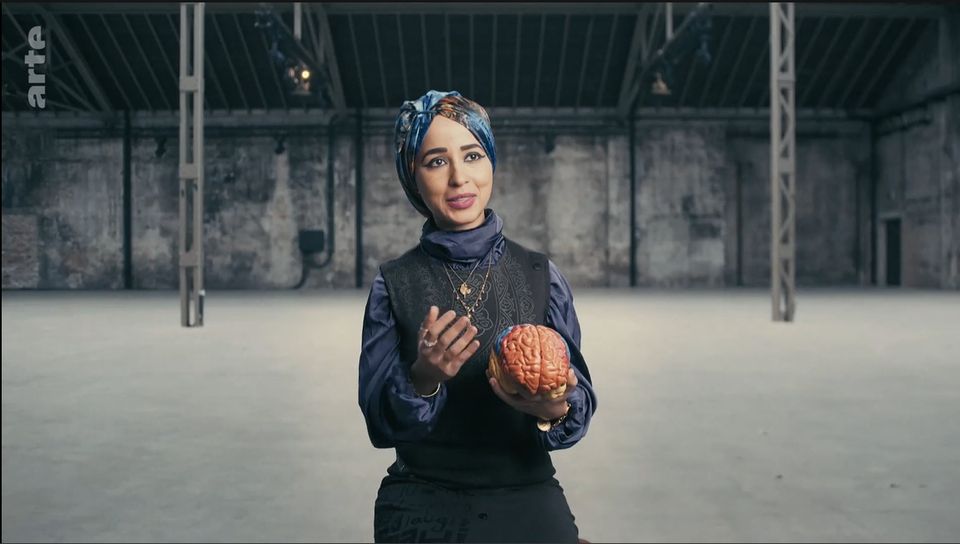
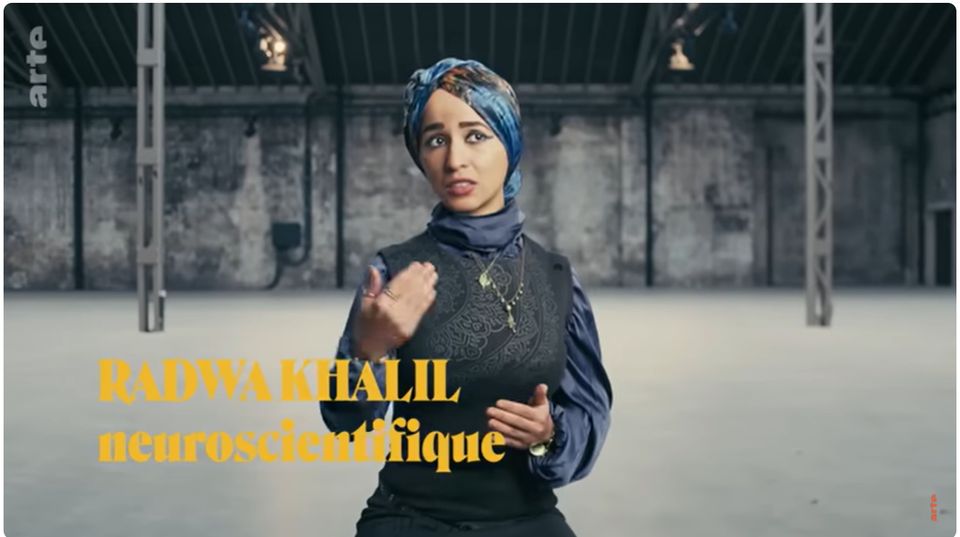
Portrait of Dr. Radwa Khalil
Advisory · Research · Translation The boardroom dialect · in the lab it reads Uncover · Adapt · Translate

Dr. Radwa Khalil

Behavioral Strategist · PhD Neuroscientist

Behavioral data science · neuro‑analytics · human‑centered AI

Ph.D. with Distinction

UNCOVER.ADAPT.TRANSLATE.

• Behavioral strategy: 15+ years turning evidence on judgment, decision‑making and performance into strategy that leadership teams act on.

• Physiological measurement: EEG, EDA and HRV, modeled computationally to read decisions under uncertainty.

• Human‑centered AI: Operating models and AI environments that cut decision latency, reduce execution risk and sustain innovation across global organizations.

01Behavioral modeling & psychometrics 02Neuroimaging & brain stimulation (EEG · EDA · HRV · tDCS) 03Predictive AI & neurocomputational modeling 04Data analytics & business intelligence
Core Philosophy · Dual-Core Paradigm Splitter Module

The Architecture of Performance: Where History Meets Modern Science

Most performance data captures only surface-level outcomes. Underlying factors include the biology of cognition and perception, shaped by civilizational patterns over millennia.

Dual-Core Paradigm Splitter ModuleHistory 50 · Neuroscience 50
Left Focus · The Historical Cradle
THE HISTORICAL CRADLE — ARCHITECTURAL INVARIANTS OF LEADERSHIP
• Cosmic Harmony: The sun represents balance, cycles, and the interconnectedness of all life.
• Civilizational Patterns: Timeless structures of governance, learning, and cross-border community.
• Protection & Intuition: The cat symbolizes presence, strategic intuition, and deep inner knowing.
• Life Flow & Adaptability: The Nile represents flow, systemic renewal, and continuous human capital growth.
Right Focus · The Neuro-Computational Engine
Historical Resilience Invariants Matrix—Continuity · Succession · Monumentality
Paradigm Blend—Cross-core synergy —
Modern Executive Performance Calibration Index—Spike-rate · Coherence · Decision latency

These three figures are the headline; the curve behind them is on this page too: Growth Trajectory 2010 → 2026 · Google Scholar snapshot · What the method is worth: the Science of Success

Five‑minute read

How to read this page in five minutes

If you have five minutes rather than an afternoon, these five stops tell the whole story. Each one opens the section it describes; everything else on the page is evidence for what these five say.

  1. 1Who I am · one minuteA behavioral strategist and PhD neuroscientist. I study how people judge, decide and create, and I translate that evidence into decisions organizations can act on. The console beside my name shows the idea in motion: move the sliders and watch a team’s state change.
  2. 2How I think · one minuteThree frameworks from my own papers — adaptive decision‑making, Hopfield networks as a model of creative thought, and four thinking styles as a model of cognitive diversity — each followed by what it means for a team or a strategy.
  3. 3How I work · one minuteUncover · Adapt · Translate: a three‑stage method that runs from surface metrics to the structural drivers beneath them and back into decisions, with a feedback loop rather than an ending. The decoder matrix and the simulators let you try it.
  4. 4What I have done · one minuteThe verified record: publications and citations, keynotes and broadcasts, teaching and the people I have mentored, with a particular thread on women entering science, leadership and technology.
  5. 5What shaped me, and how to reach me · one minuteSix interests, the forty‑one books behind the work, and a short form for a conversation. If one thing here caught your attention, that form is the place to say so.
Expertise · Four Consulting Lenses

Capabilities, Credentials and the Transformation Baseline

What I bring to a case team, mapped to the four lenses consulting firms assess, with the proof for each capability linked on this page. A code and analysis portfolio (Python, SQL, TensorFlow) is being curated for release and is available on request.

Active Credentials
WBS Coding SchoolData Science & AI Program · 2026 – PresentMIT OpenCourseWareBrain & Cognitive Sciences TracksMcKinsey.org ForwardCore Skills Level · Oct – Dec 2026
CourseraAI Course Series · 2026 – PresentRiseGuide PlatformExecutive Leadership Accelerator & SynthesisSelf-Leadership · Dr. Shadé ZahraiLeadership Accelerator
Core Expertise Matrix
Consulting Lens
10capabilities in view · hover a card for proof, click to expand
Analytical & Research Methods
Communication, Facilitation & Influence
Innovation & Intelligent Systems
Growth Trajectory · 2010 → 2026four lanes · hover a marker · click to open the proof
Co‑authorFirst authorSenior authorCo‑editorSpeakerCo‑chair · invitedChair · keynote · televisionMethod or tool adopted
Research · authorship role
Communication · from speaker to keynote
Analytical stack · widening every phase
Output · indexed works per yearcitations per year in the readout
201020122014201620182020202220242026
From co‑author to senior author, from symposium speaker to plenary keynote, from modeling to machine learning — 55 indexed works (53 dated on the timeline), 957 citations, +75% in citations per year from 2023 to 2025.Hover any marker to read the milestone; click it to open the evidence on this page.

My human-centered strategy directly aligns with large-sample corporate research on organizational transformations. While traditional turnarounds face high failure rates, integrating structured behavioral change frameworks and comprehensive execution metrics makes an enterprise 1.4 to 1.5 times more likely to capture its full value targets successfully. The two simulators on this page compute that index live from the forces you set: Ecosystem simulator · Behavioral optimization simulator.

The method named in the profile header, step by step

Uncover: Hypothesis-Led DiagnosticsStructured problem framing decomposes systemic ambiguity into a prioritized action ledger from the first week of an engagement.See it in the pipeline · Stage 01 →
Adapt: Dynamic System-SwitchingNeurocomputational plasticity models keep execution teams exploring high-value alternatives where static operational routines stall.See it in the pipeline · Stage 02 →
Translate: Executive Decision TelemetryClosed-loop stakeholder communication channels convert complex analytical insights into verified, board-level decisions.See it in the pipeline · Stage 03 →
Bibliometric Pulse · Google ScholarVerified snapshot ·
Source: Google Scholar author profile · figures mirror the live record on the snapshot date · 2026 is year‑to‑date · year‑by‑year curve ↑Open live profile ↗
Surface Metrics Deconstruction Decoder MatrixSymptom ➔ Structural Driver

📊 TRADITIONAL ENTERPRISE METRICS

🧠 SYSTEMIC BRAIN COGNITIVE DRIVERS

01 · Structural Driver

Neurocomputational Choice Frameworks

Maps the exploration-exploitation neurocomputational value loop, isolating exactly whether an enterprise team member or prospect attempts a transformative path or defaults to routine traps.

02 · Structural Driver

Neuropsychological Stress Signatures

Identifies systemic brain-behavior relationships, isolating specific neuropsychological profiles and stress markers that cause talent freezing and organizational disengagement under deep market uncertainty.

03 · Structural Driver

Neural Plasticity & Attentional Focus Metrics

Measures functional brain network plasticity, exposing why execution teams fail to adapt or rewire fast enough when clear signal is buried under complex corporate data noise.

🔍 DEPLOYABLE DIAGNOSTIC LENS:
[ Designing AI-Assisted Workflows ] [ Restructuring Teams ] [ Rebuilding Agile Enterprise Operating Rhythms ]
Select a lens to see the leading indicators it is built on
↺ Feedback loop · the outcomes of Step 03 re‑enter Step 01 as new surface data, and the cycle starts again
The Four Pillars of Performance Dashboard4 tracks armed
PILLAR 01: DECISION SYSTEMS
PILLAR 03: RESILIENCE
PILLAR 02: EXECUTION
PILLAR 04: ADAPTATION

[ Cognitive Mastery & Self-Trust ]

🧠 NEURO MECHANISMQuantifying neural prediction errors and prefrontal feedback loops to eliminate executive blind spots under high-stakes market volatility.
⚠️ ADVISORY FRICTIONData is incomplete, the clock is running, and leaders fail to isolate confidence from noise.
🛠️ STRATEGIC OUTCOMEDeploying data-driven workflow filters that isolate true confidence signals from systemic background data noise.

[ Actionable Behavioral Momentum ]

🧠 NEURO MECHANISMOptimizing cognitive reward intervals and habit-loop sequencing to embed rapid task execution into day-to-day team operations.
⚠️ ADVISORY FRICTIONTeams collapse under operational momentum blocks and invisible progress tracking.
🛠️ STRATEGIC OUTCOMEStructuring agile milestone cadences that transform raw strategic potential into immediate, sustainable daily operational momentum.

[ Rewiring Performance Friction ]

🧠 NEURO MECHANISMDiagnosing functional brain stress responses and cognitive fatigue thresholds to isolate the hidden root causes of organizational friction.
⚠️ ADVISORY FRICTIONFriction suppresses operational output, locking teams into counter-productive routine traps.
🛠️ STRATEGIC OUTCOMEBuilding psychological safety hubs and restructuring team boundaries to safely absorb disruption and accelerate cross-functional problem-solving.

[ Intentional Mindset Alignment ]

🧠 NEURO MECHANISMCalibrating behavioral exploration-exploitation loops to enable fluid switching between core routines and active market exploration.
⚠️ ADVISORY FRICTIONGlobal markets adapt instantly, forcing enterprise cohorts to default to panic over purpose.
🛠️ STRATEGIC OUTCOMERebuilding enterprise operating rhythms with a shared adaptive vocabulary, ensuring teams rapidly pivot the moment market conditions shift.
Closed-Loop Neuro-AI Data Engineering Wheel3 stages · unified feedback loop

🕹️ STAGE 01: THE BEHAVIORAL METHODOLOGY & TESTING INGESTION LAYER

Data Systems NodeArchitectural Pipeline Ingestion EngineEngineering high-velocity data pipelines to clean, normalize, and extract high-fidelity signal features from unstructured, real-time behavioral telemetry streams.
Neuro-Behavioral NodeEmpirical Human-in-the-Loop FrameworksStructuring automated behavioral evaluation protocols and algorithmic parameter boundaries to securely capture decision trajectories under complex market noise.

🧠 STAGE 02: THE NEURO-AI COMPUTATIONAL CORES (THE INTEGRATED SYSTEM)

Data Systems NodeScalable AI Infrastructure & Neural ModelingDesigning robust transformer architectures and enterprise GenAI RAG networks to optimize decision routing and reduce operational latency across matrix environments.
Neuro-Behavioral NodeBiometric Telemetry Mapping & AnalyticsTranslating multi-channel neurophysiological data matrices (EEG, HRV and EDA) into actionable, calibrated human-capital performance and execution benchmarks.

📊 STAGE 03: ADVANCED DATA VISUALIZATION & EVIDENCE SYNTHESIS OUTPUTS

Data Systems NodeEnterprise Knowledge Graphs & ArchitectureBuilding distributed relational schemas and high-density database nodes to systematically track, maintain, and cache organizational performance indicators.
Neuro-Behavioral NodeEvidence Synthesis & Advisory OutputsSynthesizing institutional empirical data streams into evidence-based leadership profiles and predictive performance roadmaps for multinational executive boards.
Where Disciplines Meet
Research narrative · 1 min 43 s · sound on

Where Disciplines Meet — from research focus to leadership value

Cognition · Psychology · Computational modeling · Emotion — how four lines of work converge, turn into impact, and translate challenge into leadership value. Written and produced by Dr. Radwa Khalil, 2026.

Written, produced and narrated by Dr. Radwa Khalil · original work © Dr. Radwa Khalil
Why it matters for strategyInterdisciplinarity is not a biography detail here; it is the operating model — the same convergence a consulting team needs when a client problem refuses to stay inside one function.
Core Framework · I
Core Framework · Adaptive Decision‑Making · Figs. 1 – 3

Adaptive Decision‑Making “Fast” and “Slow” — A Model of Creative Thinking

Khalil & Brüne · European Journal of Neuroscience (2025) · doi:10.1111/ejn.70024 ↗

Figure 1 — Adaptive decision‑making: factors across human, animal and environment feed rationality, uncertainty and novelty; adaptation links them through cognitive load and information processing to fast and slow thinking, shown as opposing arrow flows in the brain Figure 2 — the full map: creative‑thinking components (fluency, originality, clustering, switching, dual pathway, novelty seeking) over fast and slow thinking; learning skills from exploratory/uncertainty/narrow/local/spontaneous to exploitatory/certainty/broad/global/deliberate across perception, cognition, attention and emotion; bottom‑up and top‑down loops through cortex, striatum, pallidum and thalamus Figure 3 — flexible learning phase (motor: skill acquisition, playing, motor babbling; limbic: hedonistic exploration, taste learning, emotional lability; sensory: sensory discrimination, perceptual learning; cognitive: deliberative decision, causality experience, exploratory behavior) versus persistent stereotyped phase (motor repertoire, stereotyped gestures; categorical perception, complex object representation; preferences, tastes, empathy; heuristics, cognitive bias and expertise, attention and memory); inset: information transfer‑range and persistence by sensory modality with modulators ⤢ enlarge

Fig. 1 · Khalil, R., & Brüne, M. (2025). Adaptive decision‑making “fast” and “slow”: A model of creative thinking. European Journal of Neuroscience. doi:10.1111/ejn.70024

Decisions adapt — or they fail

Every decision sits between rationality and uncertainty, with novelty as the third pole. Adaptation is the act of re‑weighting them as cognitive load and information processing change, switching between fast, intuitive and slow, deliberate thinking as the situation demands.

Why it matters for strategyThis is the decision architecture every consulting engagement runs on: a structured (slow) problem‑solving process that still has to act fast under uncertainty. The model gives a shared language for when to switch mode — and what it costs not to.
Core Framework · II
Core Framework · Hopfield Neural Network · Figs. 6 & 3

Reconstructing Creative Thoughts — Hopfield Neural Networks

Checiu, Bode & Khalil · Neurocomputing 575, 127324 (2024) · doi:10.1016/j.neucom.2024.127324 ↗

Figure 6 — a thinker imagines how a flower leads to honey: the first knob of creativity decomposes the flower into features, associative chains link features to pollen, and the second knob of creativity reconstructs the missing link — the bee Figure 3 — (A) heat map of recall success rate against number of stored patterns and threshold; (B) the recall threshold rises with the number of patterns and saturates near 80 ⤢ enlarge

Fig. 6 · Checiu, D., Bode, M., & Khalil, R. (2024). Reconstructing creative thoughts: Hopfield neural networks. Neurocomputing, 575, 127324. doi:10.1016/j.neucom.2024.127324

Creativity as pattern completion

A Hopfield network stores memories as attractors and recalls a whole from a fragment. The model treats a creative thought the same way: decompose the known (the flower), follow associative chains (pollen), and let the network complete the missing link (the bee) that connects it to the goal (honey).

Why it matters for strategyTwo tunable “knobs” — how finely a problem is decomposed and how far associations are allowed to travel — control whether a team converges on the obvious or reconstructs the non‑obvious. They are parameters, not personalities, and can be set per workshop.
Core Framework · III
Core Framework · Cognitive Diversity · Figs. 1, 8 & 3

We Do Not Think Alike — Four Thinking Styles as a Model of Cognitive Diversity

From “Creative Therapy in Health and Disease: Inner Vision” · Khalil & Demarin · CNS Neuroscience & Therapeutics 30(3) (2024) · doi:10.1111/cns.14266 ↗

Figure 8 — creative therapy as the bridge between neuroscientists (brain plasticity, brain imaging, brain–process and process–brain) and clinicians, neurologists and psychiatrists (brain potential: recovering, slowing disease progression) Figure 1 — four thinking styles on rational–intuitive and conceptual–instinctive axes: analytical (logical, technical, financial, fact), experimental (risk taker, intuitive, big picture, future), practical (organised, detailed, structured, form) and relational (emotional, sensory, people, feeling) Figure 3 — (A) brain networks in axial view; (B) default‑mode network for reasoning, social cognition and imagination, salience network as the dynamic switch, and central‑executive network for executive functions and convergent thinking ⤢ enlarge

Fig. 1 · Khalil, R., & Demarin, V. (2024). Creative therapy in health and disease: Inner vision. CNS Neuroscience & Therapeutics, 30(3), e14266. doi:10.1111/cns.14266

We are not the same — and that is the asset

People think along two axes — rational to intuitive, conceptual to instinctive — and settle into four styles: analytical, experimental, practical and relational. No style is the “right” one; a complete team, like a complete brain, needs all four talking to each other.

Why it matters for strategyCognitive diversity is a performance variable, not a courtesy. Staffing a case team across all four quadrants — and knowing which quadrant a client decision‑maker lives in — is how analysis becomes adoption.
Human Methodology Blueprint
Multiple levels of analysis · how Stage 01 is measured on the human

Fig. 3 of Attention Unleashed — Bou Sader Nehme, Macaluso & Khalil, iScience (2026) · doi:10.1016/j.isci.2026.115387 ↗

Multiple levels of analysis — functional and anatomical brain metrics, inter‑individual differences, multivariate and univariate brain–behavior analysis, cognitive test scores and self‑report measures, individualized versus group‑based approaches over time, and the recording toolkit: MRI, EEG, tDCS/neuromodulation, MEG and polysomnography ⤢ enlarge
One participant, many measurements

The human is measured at several levels at once — brain function and anatomy, statistical models linking brain to behavior, cognitive tests and self‑report, and study designs that follow individuals or groups over time. Robust conclusions come from triangulating across them.

Why it matters for strategyThis is the ingestion discipline behind Stage 01 of the wheel: define the level of analysis before collecting a single data point, or the model downstream inherits the noise.
Attention Architecture
How attention routes creative thinking through the brain’s networks

Fig. 4 of Attention Unleashed — Bou Sader Nehme, Macaluso & Khalil, iScience (2026) · doi:10.1016/j.isci.2026.115387 ↗

Creative thinking components (fluency, originality, clustering, switching, dual pathway, novelty seeking) feed fast and slow thinking; attention spans local to global — undirected/directed, spontaneous/deliberate, narrow/broad, stimulus‑driven/goal‑directed, bottom‑up/top‑down — implemented by the default mode, central executive, ventral and dorsal attention networks; side strip: mind‑wandering, daydreaming, mindfulness, rumination ⤢ enlarge
Attention is the routing layer

Creative thinking is not one process but a set of components that attention routes through fast or slow channels, along a local‑to‑global span, and onto four large‑scale brain networks. Change where attention sits and the same mind produces a different kind of idea.

Why it matters for strategyMost “innovation problems” are attention‑allocation problems. This map gives a shared vocabulary for diagnosing whether a team is stuck in narrow, stimulus‑driven exploitation or needs broad, goal‑directed exploration — and which conditions move it.
Guiding PrincipleS + C + K + P = A
SService
+
CCollaboration
+
KConsistency
+
PPossibility
=
AAchievement100
drag a symbol ↑↓
The engine behind the equation · original concept & diagram by Dr. Radwa Khalil

Accumulative Knowledge — a cycle, not a ladder

Five forces turn one wheel around a single hub: Passion ignites, Determination sustains, Commitment delivers, Focus sharpens, and Supportive Networks carry it onward — each turn adding to the knowledge at the center.

Cycle diagram: Passion → Determination → Commitment → Focus → Supportive Networks, circling a hub labelled Accumulative Knowledge; around it a networked world map, a people network, books, a thinking figure and a concept map ⤢ enlarge

Figure · Khalil, R. The Accumulative Knowledge Cycle — original concept and illustration © Dr. Radwa Khalil. All rights reserved; cite as the author’s own work.

One hub, five forces

Knowledge accumulates when the wheel keeps turning. No single force is enough on its own; the sequence matters, and the networks around it are what carry one turn into the next.

Why it matters for strategyThis is how capability compounds in a team as much as in a scientist: energy, persistence, delivery, concentration and relationships — in that order, repeatedly. Diagnose which spoke is missing before adding more effort to the others.
In my own words · 59 s film · sound on

On Coherent Perspective — Range and Rigor

My proposition in one minute — four pillars, one outcome: People first · Wider lens · Better conditions · Connected disciplines. The interdisciplinary, human‑centered perspective behind the equation above.

Written, produced and narrated by Dr. Radwa Khalil · original work © Dr. Radwa Khalil
  • 01People firstWhat happens to the people using the technology?
  • 02Wider lensAre we framing the problem too narrowly?
  • 03Better conditionsWhat helps different minds think, adapt, and create at their best?
  • 04Connected disciplinesWhat becomes possible when disciplines connect?

Overview of the Strategic Pipeline

The consulting implementation methodology consists of three sequential stages that transition an engagement from analyzing human behavioral patterns to establishing an executable framework. Each stage is characterized by defined tasks and deliverables. Steps 01–03 of the diagnostic above are the working cycle inside Stages 01 and 02; Stage 03 is where that cycle is scaled across the organization, and its outputs become the next cycle's business signal.

01

STAGE 01 · INGEST & MAP [ The Least-Intrusive Baseline ]

Uncover Expanded · select to collapse
📋 INPUT BUSINESS SIGNALS[INPUT]Business Signal:Delays, repeated rework, process adoption bottlenecks, and misaligned performance incentives across matrix operational teams.
⚙️ DIAGNOSTIC ENGINE FILTER[CORE]Workflow evidence mining:Least-intrusive data compilation tracking existing workforce telemetry, operational exhaust, and task-switching metrics natively.
🏆 ACTIONABLE CONSULTING DELIVERABLE[DELIVERABLE]Scoped Diagnostic Sprint:A comprehensive process map, a prioritized set of evidence-backed intervention nodes, and an immediate executive deployment roadmap.
Demonstrated on this pageConsoleFrameworkSimulatorCapabilityLens
Hand‑off Scoped Diagnostic Sprint → input of Stage 02
Hand‑off The Diagnostic Matrix → input of Stage 03
Ecosystem Neuro-Behavioral Dynamics SimulatorMacro ↔ Micro Portal · Live Recalculation

Psychological Control Desk

Tune the three forces that govern how an organization's people absorb change, then zoom from the ecosystem of actors into the primary node's brain to watch the emotional spectrum respond.

Compliance-drivenPurpose-driven
Fear of errorCandor & trust
Clear signalSaturated noise
Equilibrium — the emotional stratum is settling.

Illustrative neuro-behavioral model. Drive and safety raise change resilience; environmental noise raises cognitive friction. Outputs are indexed to a published corporate consulting baseline, not to a client dataset — the same baseline as the Science of Success node ↑.

Macro View · Ecosystem Network Matrix — links Network of human profile silhouettes; zooming in reveals a gold brain outline with a computational lattice and an animated emotional wave Emotional Stratum · Human Emotional Spectrum Harmonic Gold Frequency · Change Resilience Click the primary node to zoom into the micro stratum
Transformation Value Capture Index1.00×vs. 30% transformation baseline
Change Resilience Score—%Harmonic bandwidth of the stratum
Cognitive Friction Load—%Red-shift pressure on the spectrum
Ecosystem Coherence—%— active actor links
Digital Product Scaling ROI—%Projected 24-month value uplift
Organizational Cognitive Matrix & Value Stream DiagramStage 01 · Filtering
Cognitive Brain Lattice Capture— nodes engaged
Live lattice · hover a value-stream node to light its stratum
Node 01 · Input

System Data Filtering

Isolating core human behavioral metrics and organizational variables from baseline enterprise noise.

Node 02 · Transformation

Change Resilience Adaptation

Translating mapped cognitive networks into resilient corporate transformation structures.

Node 03 · Output

C-Suite Value Capitalization

Deploying decision-ready neurocomputational strategies that capture up to 1.5× target financial metrics.

Bidirectional vectors: each node feeds forward into the next and returns calibration signal upstream.Value stream throughput · Filtering → Adaptation → Capitalization
Human Behavioral Optimization SimulatorInteractive Model · Live Recalculation

Behavioral Console
Select a target cohort, then tune the two forces that most often decide whether a transformation lands: the quality of the behavioral signal and the cognitive friction of switching routines.

Clean signalSaturated noise
Fluid switchingRigid routine

Illustrative decision model, not a client dataset. Noise degrades the lattice's signal integrity; friction raises the cost of each system switch and prunes weak connections. The banner metric is calibrated against a published global strategy transformation baseline. Baseline and method: the Science of Success ↑.

Portal · Neural Matrix Lattice — links Human profile silhouette overlaid with a recalculating gold neural lattice
Transformation Success Probability Score
0%
Executive Leadership Team
Signal Integrity — Switching Cost — Lattice Coherence —
Value Capture Acceleration Index
—
—
—
Science is a journey full of ups and downs. What makes it unique is the inspiring community and brilliant minds around you.
Dr. Radwa Khalil
Human Capital

Academic Leadership & Mentorship Matrix

Executive Human Capital Value Matrix

Building people and teams: leading multi‑disciplinary cohorts, designing learning programs and transferring knowledge to diverse stakeholders.

TIER 01 · POINT 01 · DAAD INTERNATIONAL NETWORKS

[ Institutional Team Leadership ] — International research cohorts:

Led and mentored 10+ Master’s and undergraduate researchers across neuroscience, psychology and computer science — including DAAD exchange students — from project framing through analysis to delivery and publication.

TIER 02 · POINT 02 · GRADUATE INTEGRATION COHORTS

[ Systems Curriculum Design ] — Decision-science teaching programs:

Designed and delivered two decision-science learning programs — judgment, cognitive biases, heuristics, risk, attention and perception — for cross-disciplinary cohorts at Constructor University (2021–2025).

TIER 03 · POINT 03 · BMBF · DFG · ERC CONSORTIA

[ Funding Leadership ] — Consortium bids as PI and Co-Investigator:

Built three competitive funding bids for BMBF, DFG and ERC programs as Principal and Co-Investigator — scoping multi-year, cross-border work packages, budgets and compliance for European research consortia.

My scientific accomplishments result from a journey of continuous learning rather than a destination.
DR. RADWA KHALIL · BEHAVIORAL STRATEGIST · PHD NEUROSCIENTIST
Women who lead

Strength, intelligence and the courage to decide

A through‑line of my work is helping women step into science, leadership and technology with confidence: as researchers whose evidence holds, as leaders who decide well under pressure, and as the next generation entering technical fields. It runs through my research on how history shapes gender psychology, through public media, and through the people I have mentored.

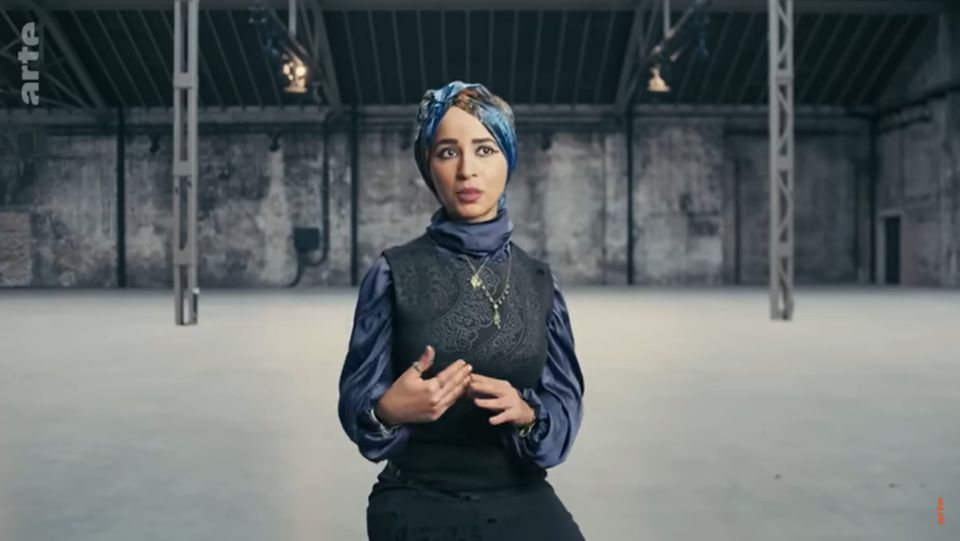
ResearchDoes history matter in gender psychology?First‑author perspective article in Frontiers in Psychology (2017, 38 citations): how knowledge of ancient Egyptian women, presented as same‑culture role models, can reshape gender roles today — followed by the co‑edited Springer Nature volume Female Pioneers from Ancient Egypt and the Middle East (2021), four chapters from Hatshepsut to the scientists of modern Egypt.Books & Book Chapters ↗ Public mediaEgypt’s female pharaohs — ARTE / NDR documentaryFeatured contributor on how women held power, built and governed in antiquity, and what that history says about leadership today. Watch in the Broadcast Stream: ARTE DE · Die Pharaoninnen or ARTE FR · Les femmes pharaons; production record in the Knowledge Hub.Broadcast Stream · ARTE ↗ VoiceWomen in Leadership · breaking the glass ceilingInvited panelist on women in academia (Constructor University, 2023) and on an International Women’s Day panel covered by the Weser‑Kurier; invited speaker at the Walter Eucken Institut’s leadership symposium “Autorschaft” in Freiburg (2024), with the talk “Creativity as a Constructive State of Mind”.Honors & panels ↗ Next generationMentoring into technical fieldsTen‑plus early‑career researchers guided from first question to final delivery across neuroscience, psychology and computer science — many of them women entering technical careers, among them the first author of our Hopfield neural networks paper (Neurocomputing, 2024), now working in robotics and technology, and two further mentees who moved into tech.Supervision & Mentoring ↗


Career Profile

Career Record · 13 Categories

Thirteen verified categories of the professional record in three groups — Academic, Empirical and Strategic. Select a letter to reveal its group; select a header to expand its entries.

[ A ]Academic Foundations & HonorsSub-rows 01 – 02
[ E ]Empirical Research & Global EngagementSub-rows 03 – 07
[ S ]Strategic Advisory & Outlet ChannelsSub-rows 08 – 13
[ A ]GROUP [ A ] ➔ ACADEMIC FOUNDATIONS & HONORS2 sub-rows

Current Appointment

  • Guest Researcher, Constructor University, Bremen, Germany
  • Independent projects in behavioral data science and AI (2026 – present), alongside the WBS Data Science & AI program and the McKinsey.org Forward program

Prior Appointments

  • Dual appointments as Neuroscientist and Lecturer, Constructor University, Bremen (2021–2025), bridging research and teaching across the biology, computer science and psychology faculties.
  • Research Scientist roles across France, Germany, the USA, Switzerland and Egypt before the Constructor years.

Education

  1. Sep 2017 – Jan 2021Ph.D. in NeuroscienceConstructor University (formerly Jacobs University), Bremen, GermanyWith distinction — Summa Cum LaudeOutcomes
    • Contributed to six book chapters with Wiley and Springer Nature in addition to reputable publications (Q1).
  2. Nov 2012 – May 2015M.Sc. in Integrative NeuroscienceOtto von Guericke University, Medical Campus, Magdeburg, GermanyOutcomes
    • Expertise in computational neural network modeling and behavioral animal models.
    • Published three first‑author papers on synaptic plasticity effects on cortical development.
    • Co‑authored four papers in reputable international journals (Q1).
  3. Sep 2008 – Sep 2009Pre-M.Sc. in Comparative Anatomy and EmbryologyFaculty of Science, Alexandria University, Alexandria, Egypt
  4. Sep 2004 – Sep 2008Bachelor of ScienceFaculty of Science, Alexandria University, Alexandria, EgyptDean’s List for academic excellence with honors

Research Internships

  1. Oct 2011 – Oct 2012Decision‑Making in Primates Using Experimental and Computational Modeling ApproachesCNRS, Bordeaux, FranceFund: European Project — FP7 [The N€uromed] and CNRS
  2. Nov 2011 – Feb 2012Frontiers in Human Brain ProjectEPFL, Lausanne, Switzerland

Summer Schools

  1. Dec 2011Cape Town School on Advanced Theoretical and Computational NeuroscienceCape Town, South Africa · One‑month intensive
  2. Sep 2011Advanced Course in Computational NeuroscienceFENS‑IBRO Training Center, Bedlewo, Poland · One‑month intensive
  3. Jul 2011The Second Joint Kemali‑IBRO Mediterranean School of NeuroscienceNaples, Italy · One‑month intensive

Integrative Expertise Synthesis

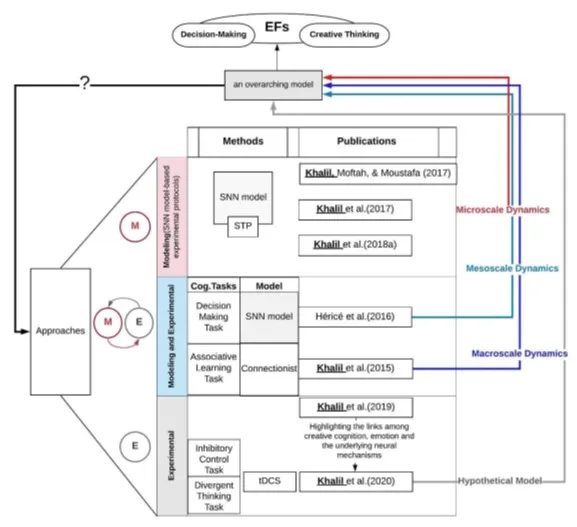
Multi-Scale Research Architecture
Frame 01Multi-Scale Research ArchitectureModeling and experimental approaches mapped across micro-, meso- and macroscale dynamics toward an overarching model of executive functions.
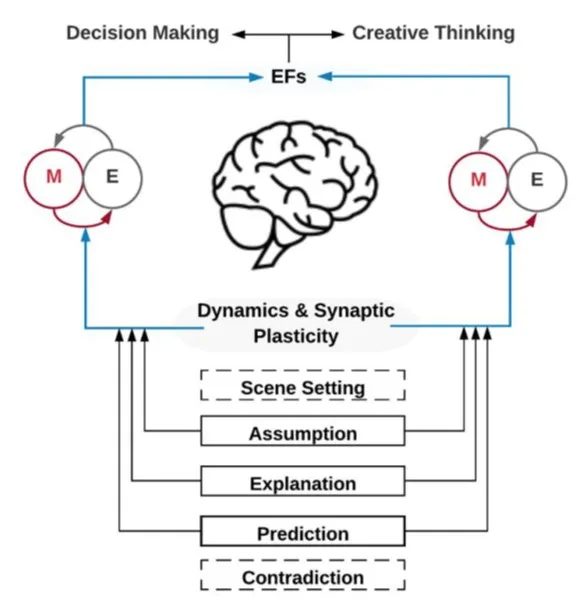
Executive Functions Theory Loop
Frame 02Executive Functions Theory LoopDecision making and creative thinking converging on executive functions through modeling–experiment cycles, synaptic plasticity and neural dynamics.
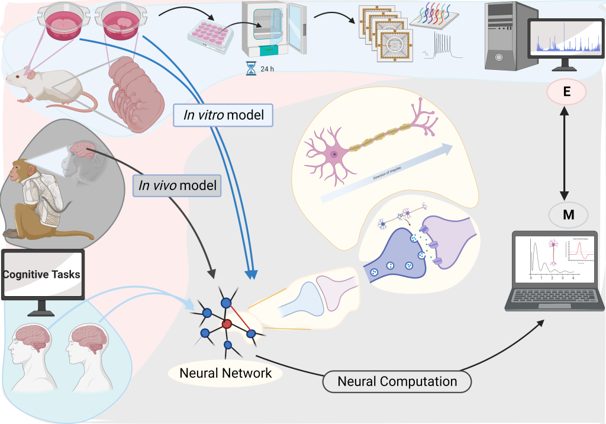
From Bench to Neural Computation
Frame 03From Bench to Neural ComputationIn-vitro and in-vivo models, cognitive tasks and neural-network modeling integrated into a single neural-computation pipeline.

Active Credentials

Apex 01 · Peak
👑 Executive Presence Architecture

Advanced executive competencies establishing boardroom command, a credible professional presence, and stakeholder-aware social intelligence.

Apex 02 · Base
📊 Structured Problem-Solving & Digital Fluency

Advanced analytical competencies focusing on hypothesis-led issue trees, data automation, and digital/virtual collaboration.

Apex 03 · Base
⚙️ Strategic Communication & Intelligence

Empirical frameworks mapping cross-functional matrix operations, complex critical thinking methodologies, and high-impact storytelling.

[ STRUCTURED PROBLEM-SOLVING ][ COMMUNICATING FOR IMPACT ][ DIGITAL ESSENTIALS ][ CRITICAL THINKING ][ EXECUTIVE PRESENCE ][ STRATEGIC COMMUNICATION ]

Recognition Timeline

  1. April 2023Invited panelist · Women in Leadership — breaking the glass ceilingInvited speaker and panelist on the glass ceiling for women in academia, Women in Leadership conference, Constructor University, Bremen.
  2. Sep 2020DAAD Award · outstanding international studentsAwarded by the German Academic Exchange Service (Deutscher Akademischer Austauschdienst) in a national competitive selection for outstanding international students.
  3. Jun 2018Cover figure · CNS Neuroscience & TherapeuticsFirst‑author review “Social decision making in autism: On the impact of mirror neurons, motor control, and imitative behaviors” selected as the cover of the special issue on Interdisciplinary Approaches for Neuropathology, edited inter alia by Prof. G. Rizzolatti.
  4. Jun 2013Best oral presentation · N€uroMed kickoff meetingAward for the best oral presentation at the kickoff meeting of the European FP7 N€uroMed project, Marseille, France.
  5. 2011 – 2015Travel grants · IBRO and FENSSeveral competitive travel grants from the International Brain Research Organization (IBRO) and the Federation of European Neuroscience Societies (FENS), funding participation in advanced schools, training courses and meetings across Europe and Africa.

Further Recognition

  • Media recognition: research on neurodiversity and creativity featured by Inc. Magazine ('ADHD Is Often Treated as a Problem. New Research Says It Has 1 Surprising Advantage').
[ E ]GROUP [ E ] ➔ EMPIRICAL RESEARCH & GLOBAL ENGAGEMENT5 sub-rows

Research Appointments

  • Guest Researcher, Constructor University, Bremen, Germany (current)
  • Research Scientist roles across France, Germany, the USA, Switzerland, and Egypt
Methodological toolkit map
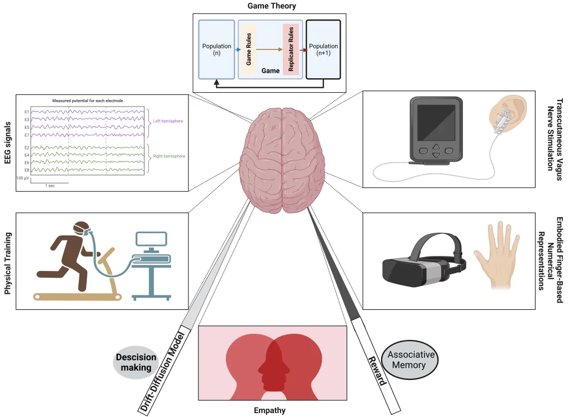
Methodological Toolkit MapMulti-Modal Research ArchitectureEEG signal acquisition, physical-training paradigms, transcutaneous vagus nerve stimulation, embodied finger-based numerical representations, game-theoretic population models and drift-diffusion decision modeling converge on a single brain-centered framework spanning decision making, empathy, reward and associative memory.Source: Padakannaya, P., Puvia, E., & Khalil, R. (2023). Methods and applications in cognitive science. Frontiers in Psychology, 14, 1321214.

Core Research Channels & Value Drivers

➔Decision architecture: predictive behavioral models of how people value risk and decide under noise and uncertainty — the research line behind the Adaptive Decision-Making framework.

➔Cognitive flexibility: measuring divergent thinking and mapping how neurodivergent minds adapt — the research line on creativity, ADHD and innovation.

➔Attention control: how attention routes between exploration and exploitation, and what it costs to switch — the research line behind the Attention Architecture map.

➔Biometric telemetry: EEG, EDA and HRV in closed-loop, flow-based designs — reading stress and emotion as they shape performance under pressure.

➔Simulation engines: interactive and game-based paradigms that track cognition across the lifespan, run with partners across Europe and beyond.

Collaboration Ecosystem

  • Europe: Spanning Germany (Berlin, Tübingen, Bremen, Würzburg, Magdeburg, Oldenburg), France (Lyon, Bordeaux), the United Kingdom (London, Bristol), Ireland (Dublin), Belgium (Leuven), the Netherlands (Amsterdam, Nijmegen, Groningen), Italy (Milan, Trieste), Austria (Vienna), Poland, Serbia, Denmark (Odense), Croatia (Zagreb), and Malta.
  • North America: Spanning the United States (New York, Los Angeles).
  • Australia/Oceania: Spanning Australia (Sydney).
  • Asia: Spanning Japan and China.
  • Africa: Spanning Egypt (Alexandria, Assiut) and Morocco.

Course Work History

  1. 2021 – 2025Judgment and Decision-MakingBachelor course · Constructor University, Bremen · risk and uncertainty, biases and heuristics, decisions under pressure
  2. 2022 – 2023Attention, Perception and SensationsBachelor course · Constructor University, Bremen · attention, sensory processing and perception

Both courses were designed and delivered for first- and second-year students in cross-disciplinary cohorts, embedding analytical decision frameworks that students carry into very different disciplines.

Course film · Judgment and Decision‑Making · 1 min 26 s · sound on

Inside the course: how people judge, decide, and where their decisions go wrong

The 2021 – 2025 course in one reel — risk and uncertainty, biases and heuristics, decisions under pressure, from the casino table to the ballot box — taught to cross‑disciplinary cohorts at Constructor University, Bremen.

Written, produced and narrated by Dr. Radwa Khalil · original work © Dr. Radwa Khalil

E‑Learning

  1. May 2013 – Dec 2017Distance Learning Tutor · Computational Neuroscience ModuleMaster’s Program in Neurosciences and Biotechnology · European Master in Neuroscience (EMN) onlineemn‑online.org · teacher profiles ↗
Film · Early Teaching and Growth · 56 s · sound on

Where the teaching began — and the growth loop it taught me

From the first distance‑learning cohorts to a method that still holds: simplify the research question, connect the dots, create new possibilities and meanings — with failure and success turning the same wheel of academic growth.

Written, produced and narrated by Dr. Radwa Khalil · original work © Dr. Radwa Khalil

Transforming Learning

I encourage the use of creative teaching methods in my classes, such as AI and humanoid robots, to facilitate classroom interaction and engagement.

Film · Transforming Learning · 1 min 17 s · sound on

Teaching and emerging tools — the adaptive decision‑making model in the classroom

How the research models become teaching material: the adaptive decision‑making framework turned into a live classroom exercise, with AI tools and humanoid robots used to make the ideas tangible and the room interactive.

Written, produced and narrated by Dr. Radwa Khalil · original work © Dr. Radwa Khalil

Cross-Faculty Teaching

  • Teaching across faculties: courses and supervision spanning the computer science, biology and psychology faculties, so that students from each learned to work with the others’ methods.

Decision-Science Curriculum

  • Designed two decision-science learning programs from the ground up, taught for five academic years.
  • Curricula covering cognitive biases, heuristics, risk, attention and perception — the behavioral foundations a future decision-maker needs to operate under uncertainty.

Mentorship Pipeline

2021 – 2022
Master’s thesis supervision

Lin Lin (Currently a PhD candidate at FAU and an associate researcher in the Gamification and Digital Customer Engagement systems research group).

2021 – 2022
Internship mentorship

Emelina Pichardo Sandino (now a Deputy Manager in industry).

2022 – 2026
Bachelor’s theses directed

Seven theses across Neuroscience, Psychology, and Computer Science and Engineering, several built on computational modeling.

2018 – 2025
Undergraduate advising

Nine students advised — seven Bachelor’s students in Neuroscience and Psychology and two DAAD RISE exchange scholars.

Record

  • Ten-plus mentees: Master’s and undergraduate researchers, including DAAD exchange students, guided from first question to final delivery.
  • Start to finish: each project taken from framing and data collection through statistical analysis to a thesis, a presentation or a publication.

Equality, Diversity, Inclusion & Belonging

Film · Inclusive Leadership · 54 s · sound on

Inclusive leadership — many minds, one brighter idea

Why inclusion is a leadership method rather than a policy: different minds working on the same problem generate the light. The principle behind the Equality, Diversity, Inclusion & Belonging record that follows.

Written, produced and narrated by Dr. Radwa Khalil · original work © Dr. Radwa Khalil

My academic journey reflects a sustained commitment to learning and teaching while advancing inclusivity and diversity in educational settings. This dedication has inspired me to create a welcoming environment for all students. Recognizing the critical role of mentorship in my development, I promote inclusion through research, teaching, and service.

Auto‑cycling · hover to pause · click a card to read in full
  1. 01
    Research

    My work has led to the creation of publicly accessible datasets and tools via the Open Science Framework (OSF), thereby increasing research access.

    Open Science Framework · public datasets & toolsRead in full ↗
    01
    Research

    My work has led to the creation of publicly accessible datasets and tools via the Open Science Framework (OSF), thereby increasing research access. These efforts have engaged new researchers, supported transparency, and contributed to broader participation in open science practices — all of which have helped reduce social inequality.

    ← Back
  2. 02
    Teaching

    I implement inclusive, interactive methods to promote fairness and equality in the classroom.

    Inclusive classroom · TA workshopsRead in full ↗
    02
    Teaching

    I implement inclusive, interactive methods to promote fairness and equality in the classroom. I also support the publication of findings from ‘Creating an Inclusive Classroom’ and teaching assistant workshops.

    ← Back
  3. 03
    Service

    I work with global and local organizations to promote diversity in STEM by building partnerships between leading and minority‑serving institutions.

    STEM partnerships · graduate recruitmentRead in full ↗
    03
    Service

    I work with global and local organizations to promote diversity in STEM by building partnerships between leading and minority‑serving institutions. I lead student workshops to increase participation and attend conferences to recruit underrepresented minority students for graduate programs, thereby increasing application rates.

    ← Back
Film · Mentorship · 1 min 26 s · sound on

Mentorship across borders — growing minds, not just projects

Nine undergraduate scholars, seven Bachelor’s theses, a Master’s thesis and exchange students from a dozen countries: how mentoring works when the mentees’ disciplines, cultures and questions differ — and why that difference is the point.

Written, produced and narrated by Dr. Radwa Khalil · original work © Dr. Radwa Khalil

Mentorship Gallery

Cohort Milestone Celebration
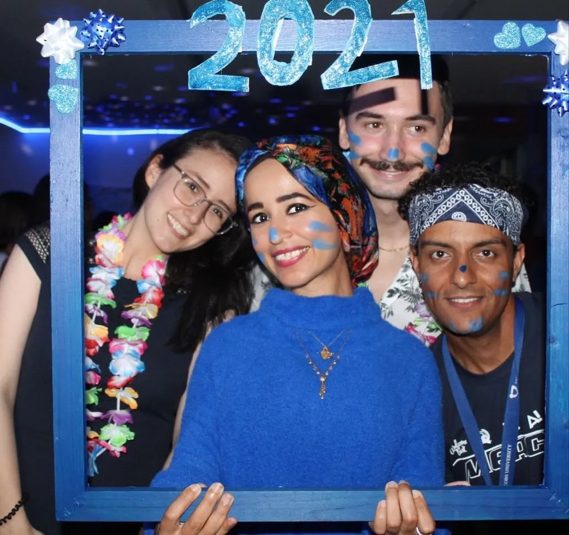
Frame 01Cohort Milestone CelebrationMentees and research team marking a shared milestone together.
Mentee Portrait
Frame 02Mentee PortraitA mentored researcher from the supervision pipeline.
Graduation Day · Constructor University
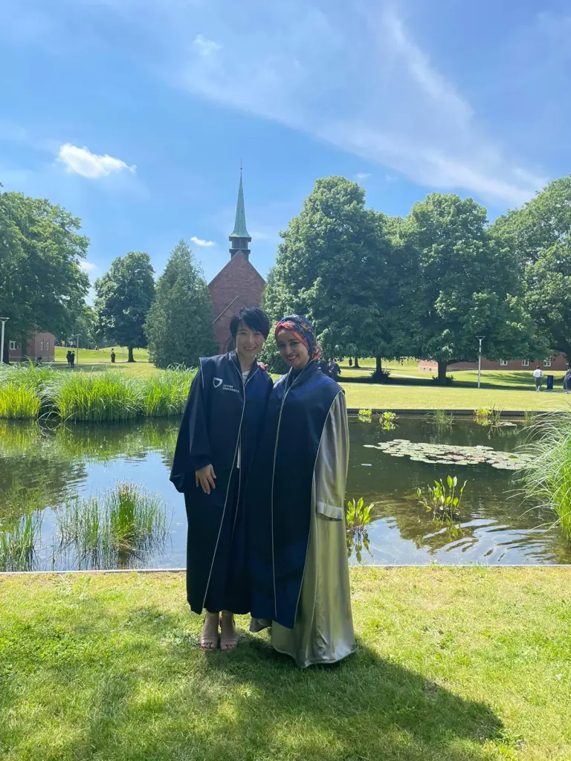
Frame 03Graduation Day · Constructor UniversityCelebrating a supervised graduate on the Bremen campus.

Keynote Timeline

  1. May 202564th Mind & Brain International Neuropsychiatric Congress — Plenary LectureInvited plenary presenter · Pula, Croatia➔Talk: ‘Bridging between Neurology and Psychiatry’ — how shared behavioral frameworks let the two fields reason about the same patient.
  2. May 202362nd Congress for Brain & Mind International Neuropsychiatric Congress — KeynoteInvited keynote speaker · Pula, Croatia➔Talk: the neurocomputational model of creative processes — what multi-channel empirical research says about creativity and its clinical relevance.
  3. Sep 2022Marconi Institute for Creativity (MIC) Conference — KeynoteInvited keynote speaker · Bologna, Italy➔Theme: ‘The 7 C’s of Creativity’ — presenting the recent book and computational research on creative cognition, neuroscience and metacognitive monitoring.

Record

  • Reach: 25+ keynotes, invited talks and media appearances, including features with ZEIT Akademie and ARTE Television.
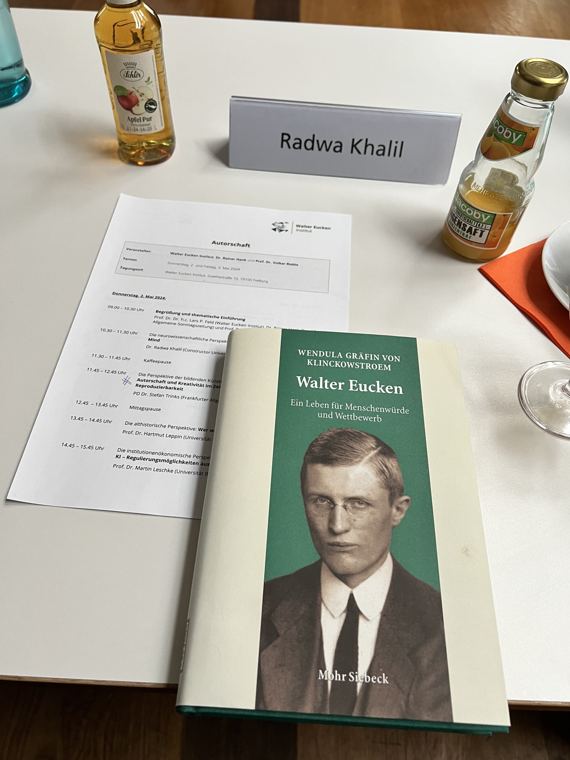
  • Leadership symposium: invited speaker at the Walter Eucken Institut’s ‘Autorschaft’ symposium, Freiburg (2024), on creativity, copyright and AI — talk ‘Creativity as a Constructive State of Mind’.

Keynote Gallery

Keynote Delivery · Plenary Stage
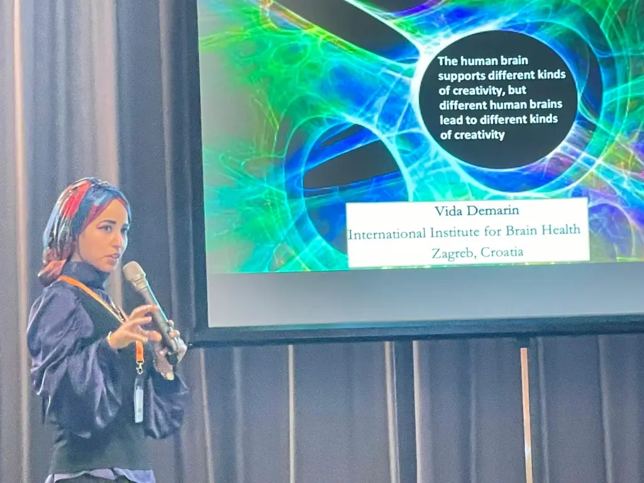
Frame 01Keynote Delivery · Plenary StagePresenting on creativity and the brain to an international congress audience.
Scientific Exchange · Congress Networking
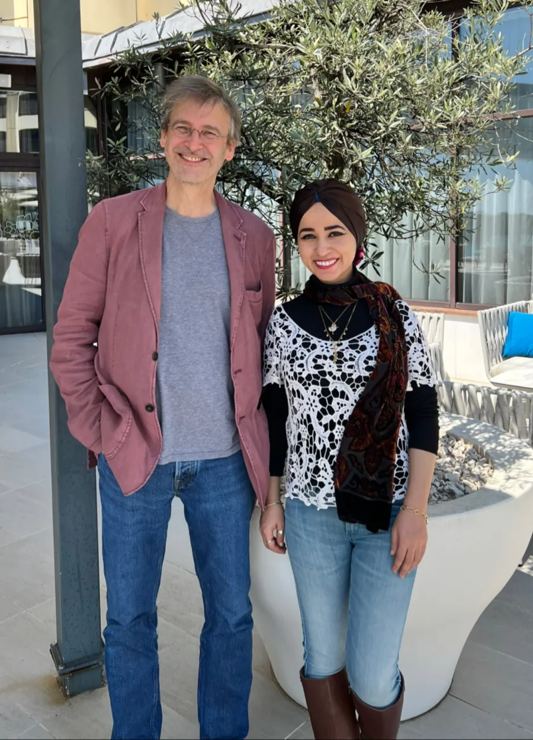
Frame 02Scientific Exchange · Congress NetworkingConversation with a fellow plenary speaker between sessions.
Congress Delegation · Brain & Mind
Frame 03Congress Delegation · Brain & MindWith fellow speakers at the Brain & Mind congress venue.
Pula, Croatia · Congress Setting
Frame 04Pula, Croatia · Congress SettingOn location during the Brain & Mind congress week.
MIC Conference · Bologna
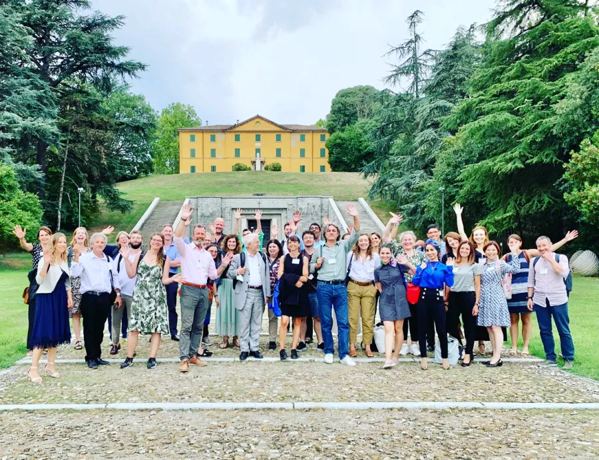
Frame 05MIC Conference · BolognaMarconi Institute for Creativity delegates gathered at the conference villa.
International Research Visit
Frame 06International Research VisitWith colleagues during an international scientific engagement.
Global Engagement · Coastal Research Venue
Frame 07Global Engagement · Coastal Research VenueA seaside host location on the international speaking and research itinerary.
Autorschaft Symposium · Walter Eucken Institut
Frame 08Autorschaft Symposium · Walter Eucken InstitutInvited speaker seat at the “Autorschaft” assembly, Freiburg — delivering the neuroscience perspective on authorship, creativity and AI.
Keynote · A Neurocomputational Model of Creative Processes
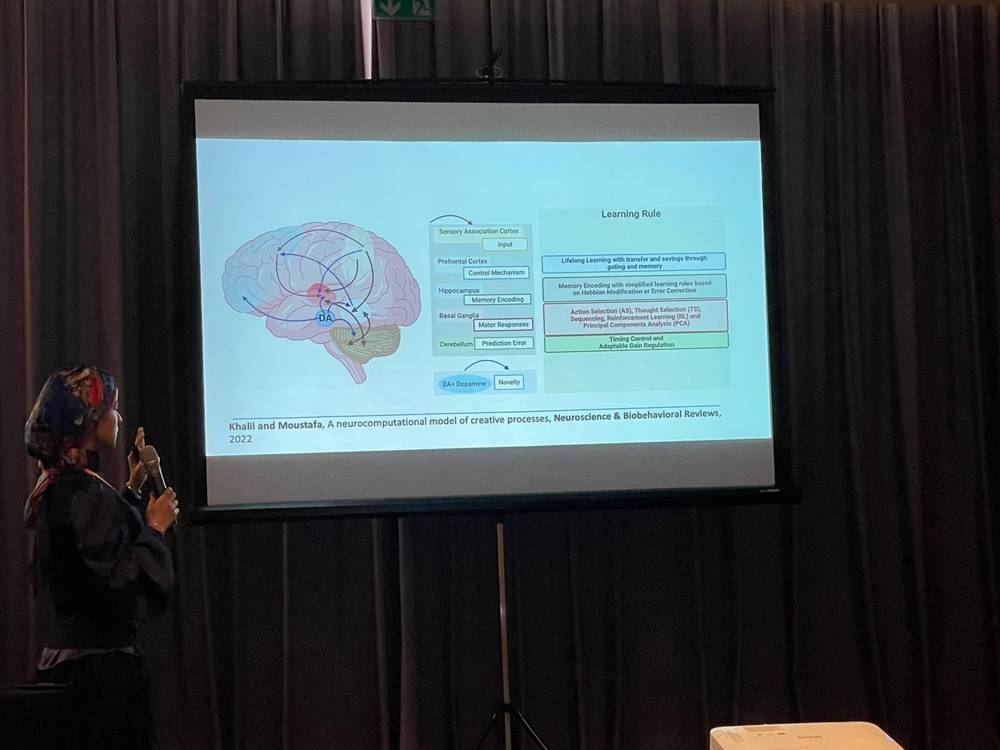
Frame 09Keynote · Neurocomputational Model of CreativityPresenting the Khalil & Moustafa (2022) model of creative processes — dopamine‑gated learning rules across cortex, hippocampus, basal ganglia and cerebellum.
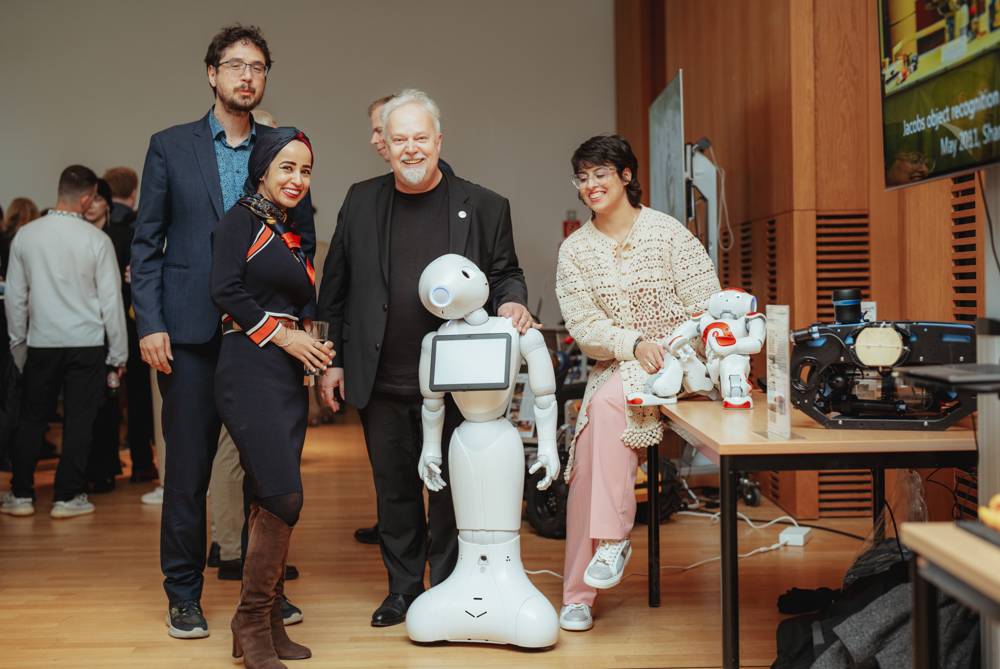
With the humanoid robots Pepper and NAO at a symposium reception
Frame 10Symposium Reception · Pepper & NAOWith fellow speakers and the humanoid robots Pepper and NAO at a symposium reception — the platforms she also uses for interactive teaching.

Global Governance & Society Networks

  1. 2020 – PresentThe Society for the Neuroscience of Creativity (SfNC)Member
  2. 2010 – PresentMediterranean Neuroscience Society (MNS)Council Member · Alumni of MNS Council [2015–2019]
  3. 2010 – PresentInternational Brain Research Organization (IBRO)Member
  4. 2010 – PresentFederation of European Neuroscience Societies (FENS)Member
  5. 2023 – PresentOrganization for Human Brain Mapping (OHBM)Member
  6. Oct 2023 – PresentSociety for Psychophysiological Research (SPR)Member
MNS logo
MNSMediterranean Neuroscience Society
SfNC logo
SfNCSociety for the Neuroscience of Creativity
IBRO logo
IBROInternational Brain Research Organization
FENS logo
FENSFederation of European Neuroscience Societies
OHBM logo
OHBMOrganization for Human Brain Mapping
SPR logo
SPRSociety for Psychophysiological Research

Conference Organization

  1. Sep 2010 – Dec 2015Scientific Workshop Organization & Society ServicesOrganization of scientific workshops at universities in Egypt, France, and Germany, and academic services to the Mediterranean Neuroscience Society.

Engagement for Impact · Cross‑Sector Convenings

  1. Apr 2025International Network for the Critical Appraisal of Arts and Health ResearchSalzburg, Austria · network convening · round‑table and co‑creation working sessionsArts × Health · Evidence standards · Critical appraisalNetwork convening · group portrait — Participants at Schloss Leopoldskron, Salzburg · photo © Leonhard Thun‑HohensteinThe network — International Network for the Critical Appraisal of Arts and Health Research — membersRound‑table working session — Mapping shared interests of scientists and creative professionalsPlenary exchange — Cross‑disciplinary dialogue with camp participantsCo‑creation workshop — Flipchart synthesis — from questions to action pointsOne‑to‑one — In conversation between sessions
  2. Jan 2025Lorentz Workshop — Building a Collective Approach to Creative CognitionLorentz Center, Leiden, Netherlands · one‑week invited workshopScience · International consortium lorentzcenter.nl ↗
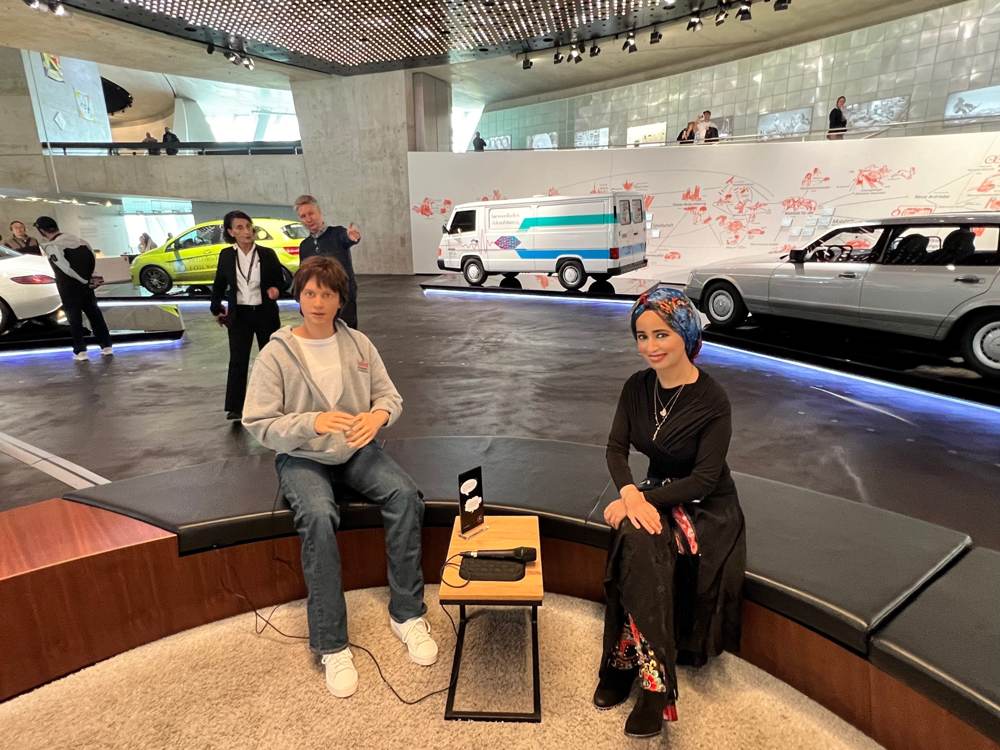
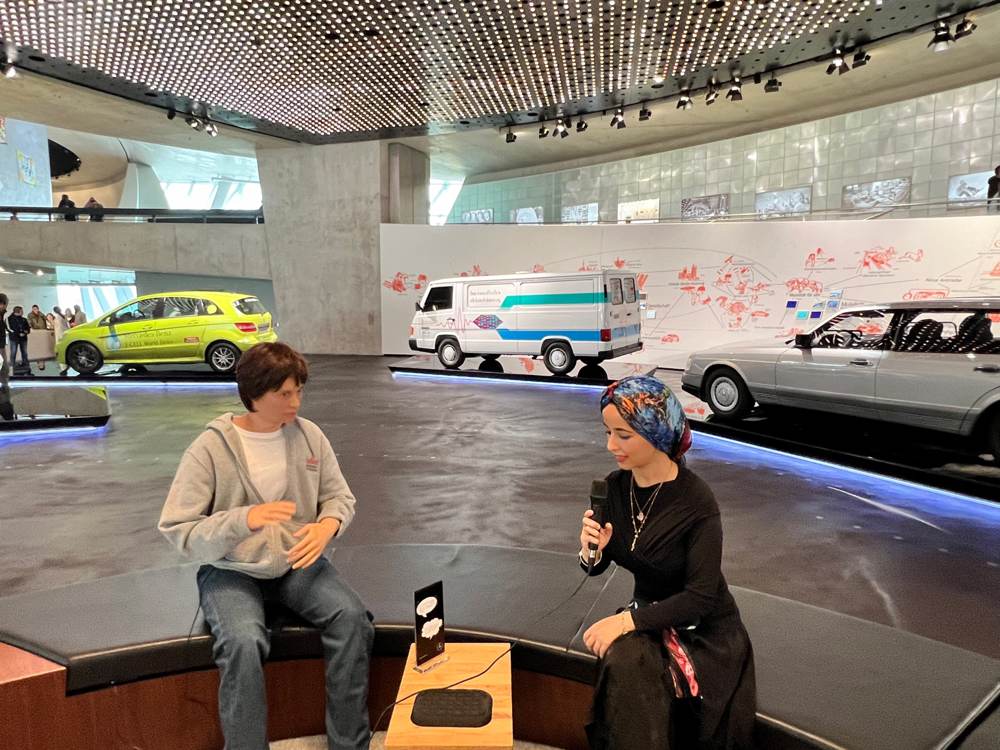
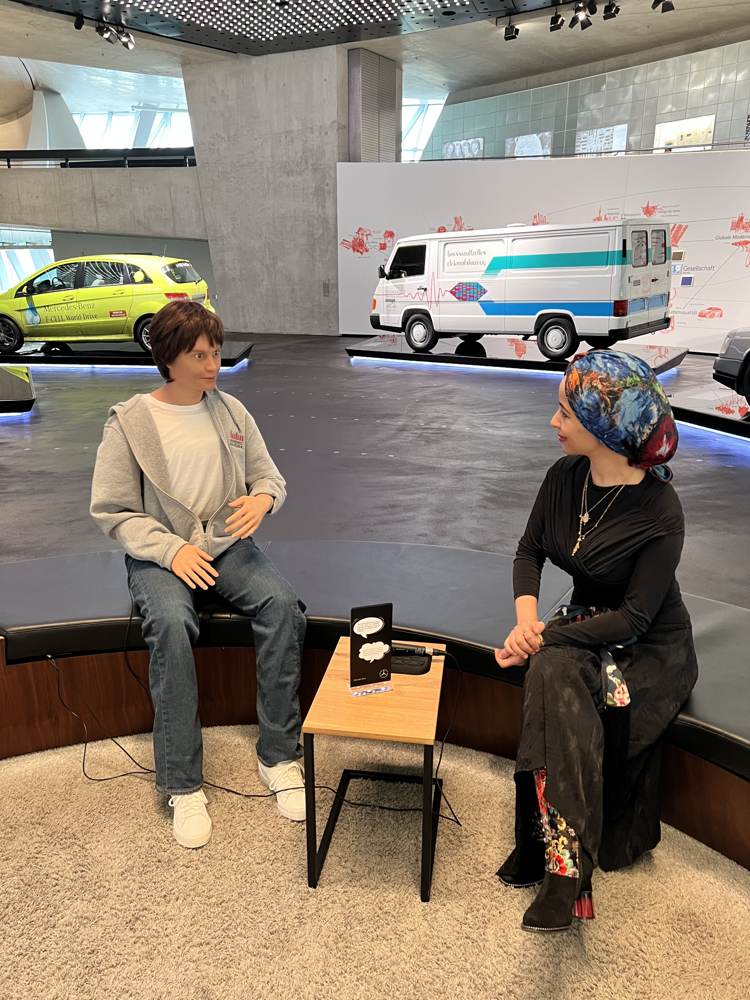
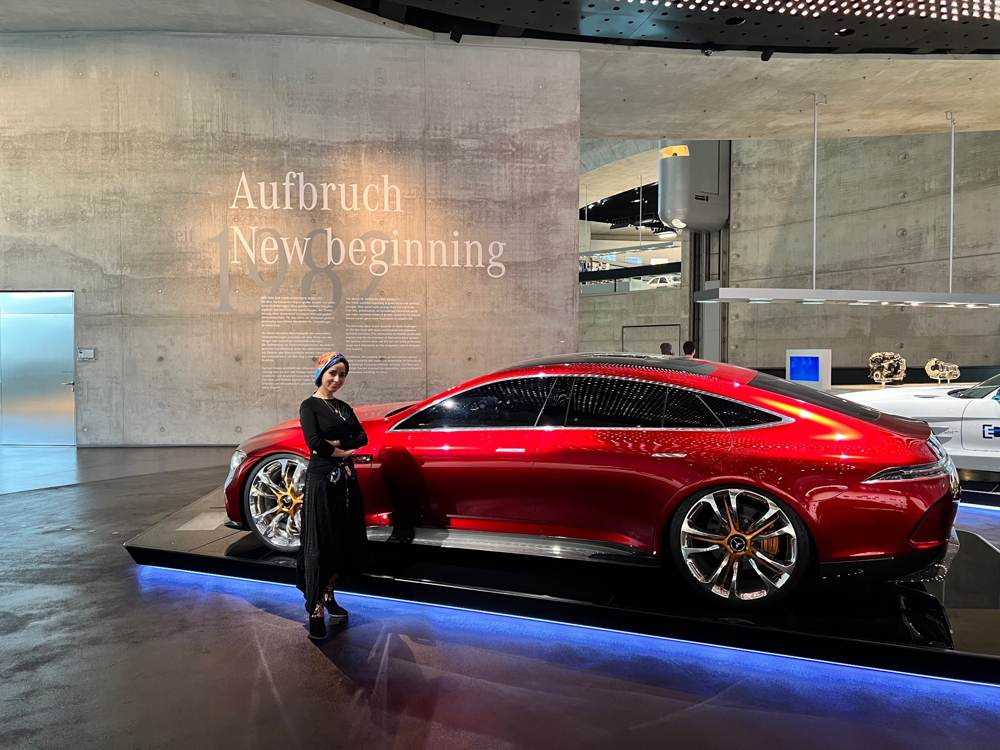
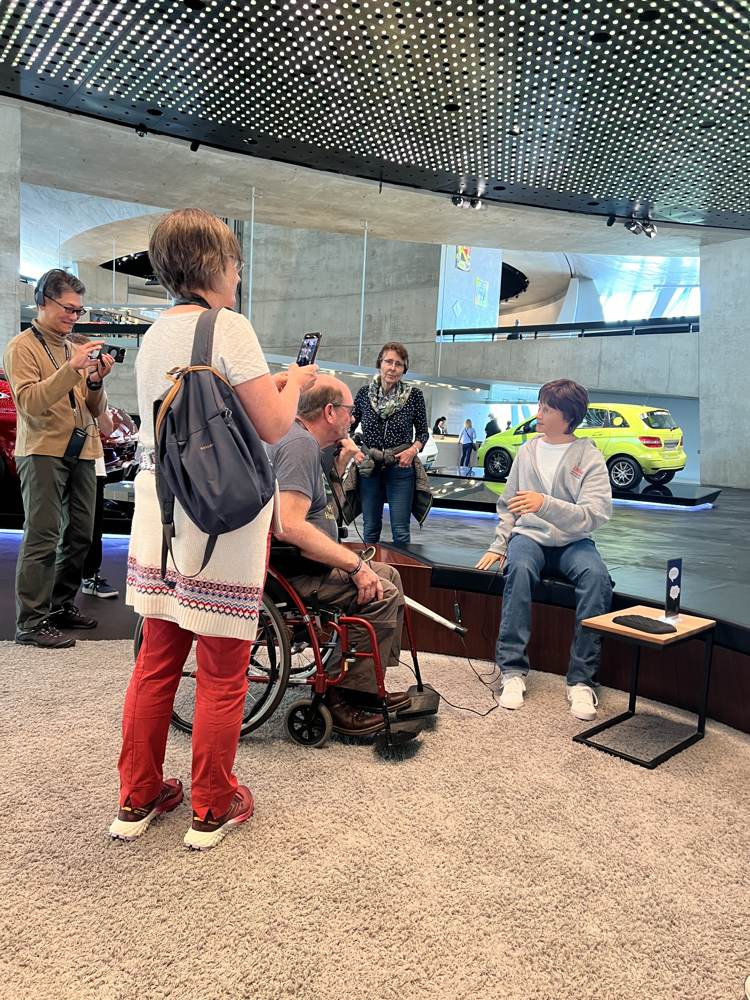
  3. Oct 2024Mercedes‑Benz Museum — Conversation with a Talking Android RobotStuttgart, Germany · invited visit · human–robot interaction in the future‑mobility hallRobotics × Mobility × Human–machine interaction Photos ↗
  4. Apr 2024CultTech Camp — Mapping the Interests of Scientists and Creative ProfessionalsThe future use of technology to enhance creative processes, knowledge production, and dissemination · Bremen, Germany · one weekScience × Creative industries × Technology culttech.at ↗
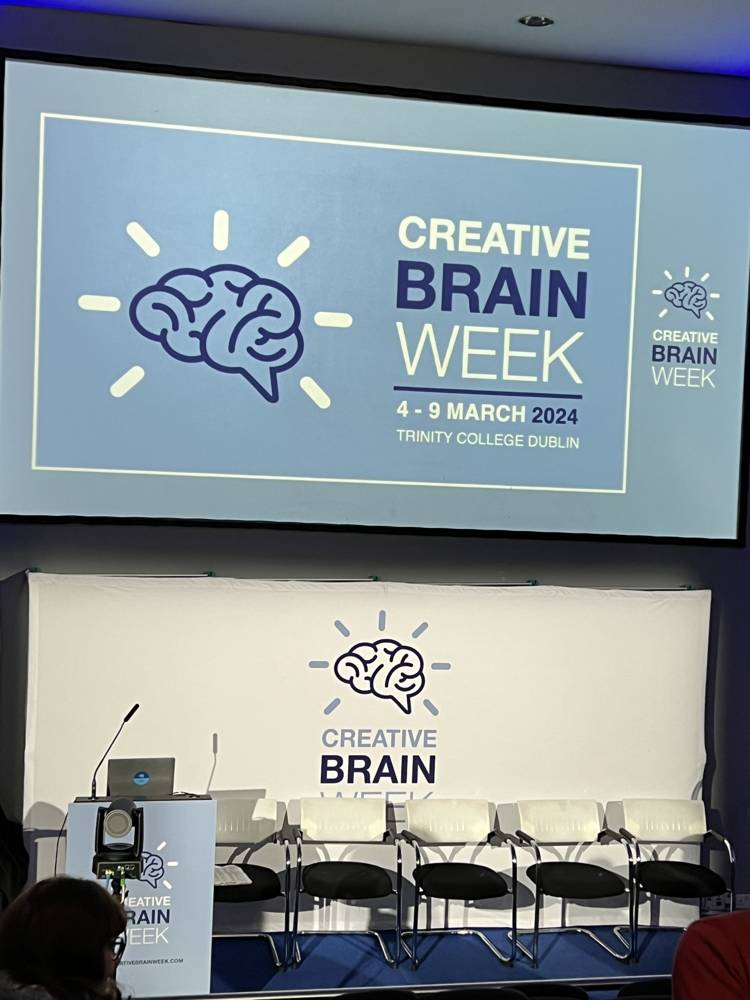
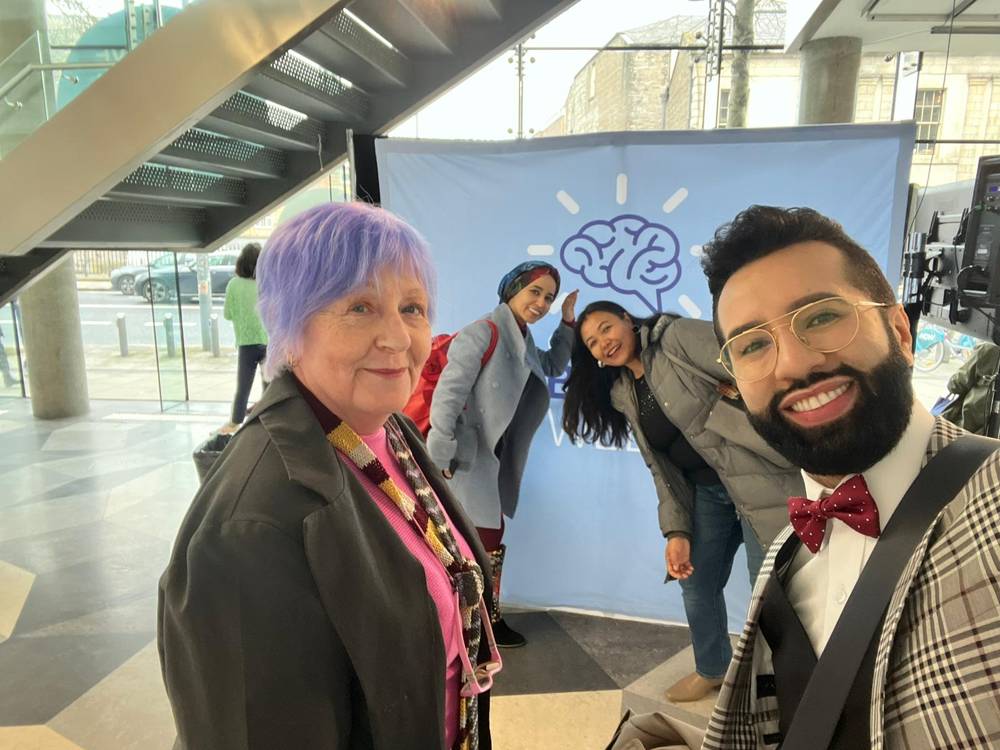
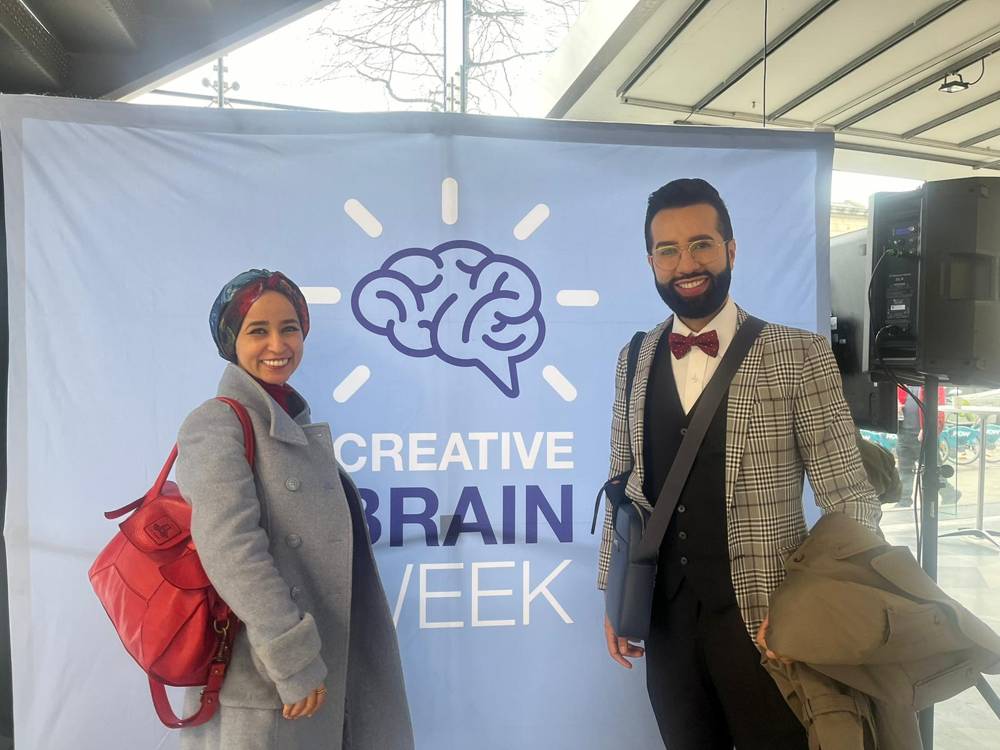
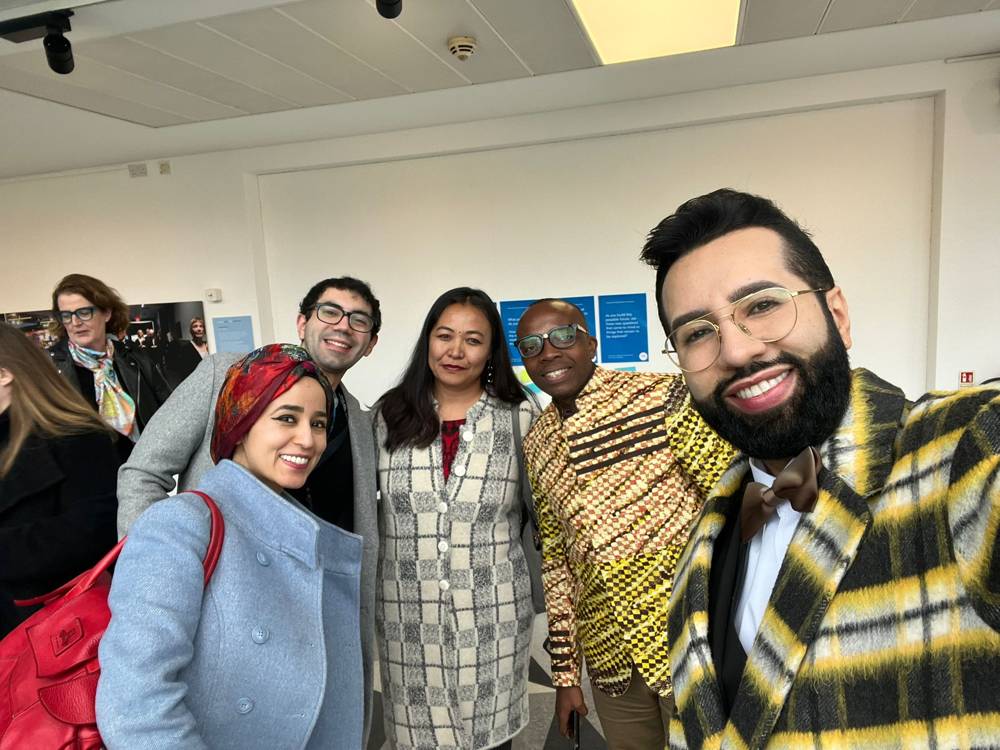
  5. Mar 2024Creative Brain WeekDublin, Ireland · one weekArts × Health × Neuroscience creativebrainweek.com ↗ Photo journal ↓
  6. Nov 2023 – Feb 2024Annual Exhibition at the House of Science BremenHaus der Wissenschaft, Bremen, GermanyPublic engagement · Science communication
  7. Sep 2022Robotic Workshop — Everyday Activity Science & Engineering (EASE)EASE Fall School, Bremen, Germany · one weekRobotics × Cognitive science ease‑crc.org ↗
Field Journal · Creative Brain Week 2024

Trinity College Dublin · 4 – 9 March 2024

Arts × Health × Neuroscience — one week across stages, installations and conversations. 13 frames

Main stage — Creative Brain Week 2024 · Trinity College Dublin · 4 – 9 March
ProgramMain stageCreative Brain Week 2024 · Trinity College Dublin · 4 – 9 March
Program in hand — GBHI booklets — “Creativity, Connection and Community” & “Understanding the Past”
ProgramProgram in handGBHI booklets — “Creativity, Connection and Community” & “Understanding the Past”
Partner stands — Arts + Health Ireland · Irish Hospice Foundation
ProgramPartner standsArts + Health Ireland · Irish Hospice Foundation
Welcome backdrop — With fellow delegates at the Creative Brain Week wall
PeopleWelcome backdropWith fellow delegates at the Creative Brain Week wall
Cross‑disciplinary dialogue — With a fellow delegate at the conference backdrop
PeopleCross‑disciplinary dialogueWith a fellow delegate at the conference backdrop
An international circle — Delegates from arts, health and neuroscience
PeopleAn international circleDelegates from arts, health and neuroscience
Between sessions — Colleagues on the glass staircase
PeopleBetween sessionsColleagues on the glass staircase
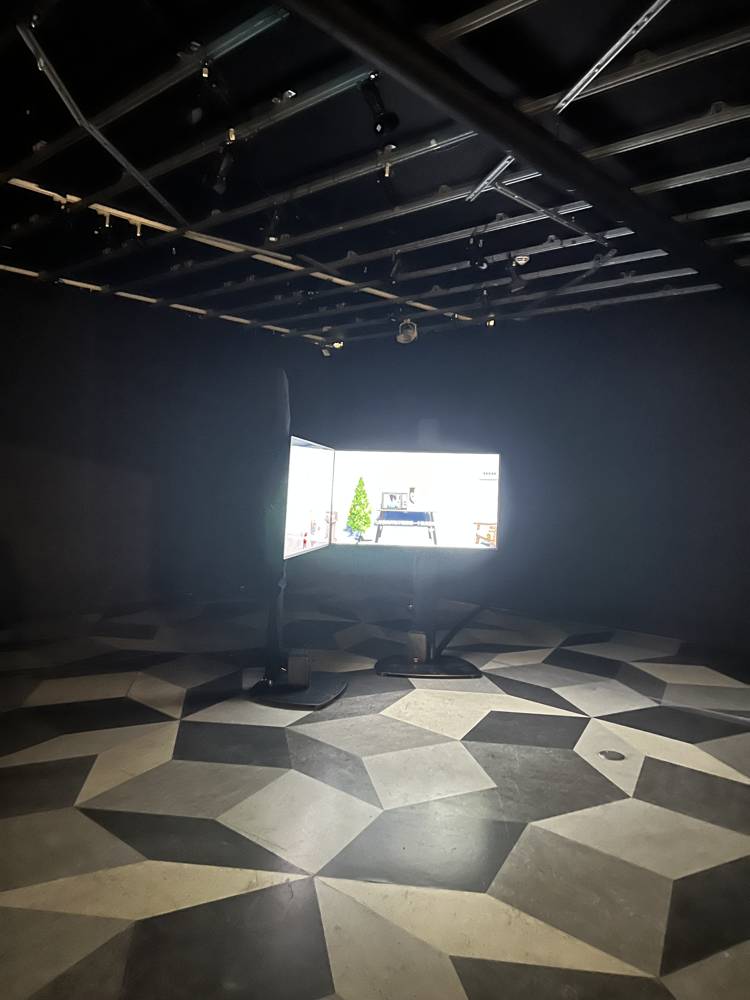
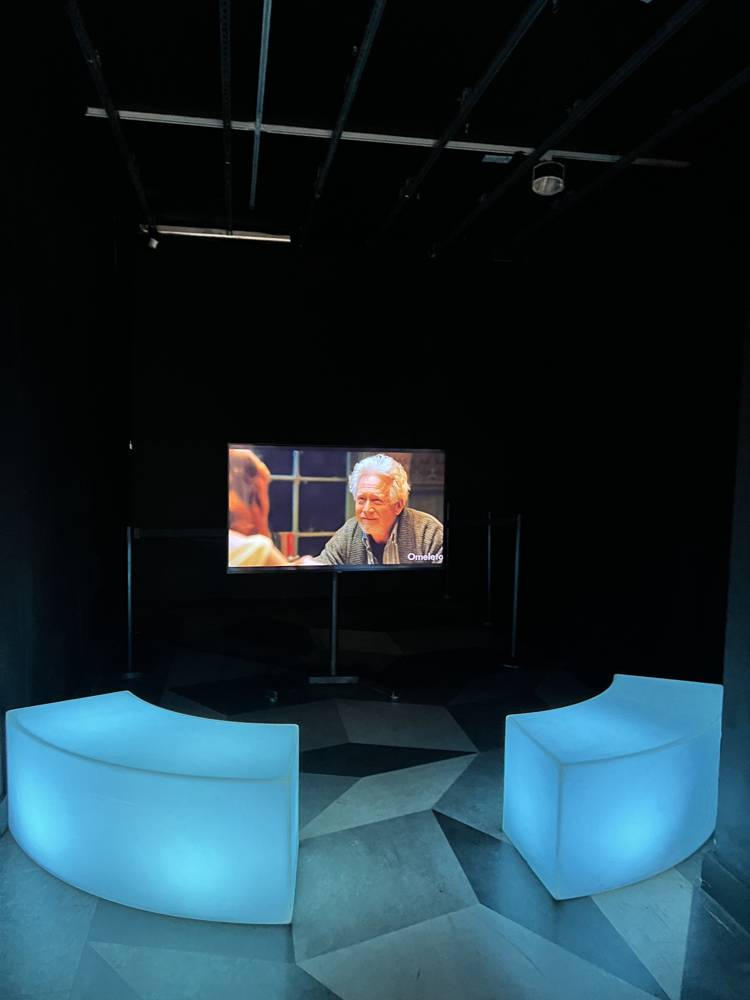
Immersive installation — Light benches and screen in the dark gallery
VenueImmersive installationLight benches and screen in the dark gallery
Immersive installation II — Projection over the geometric floor
VenueImmersive installation IIProjection over the geometric floor
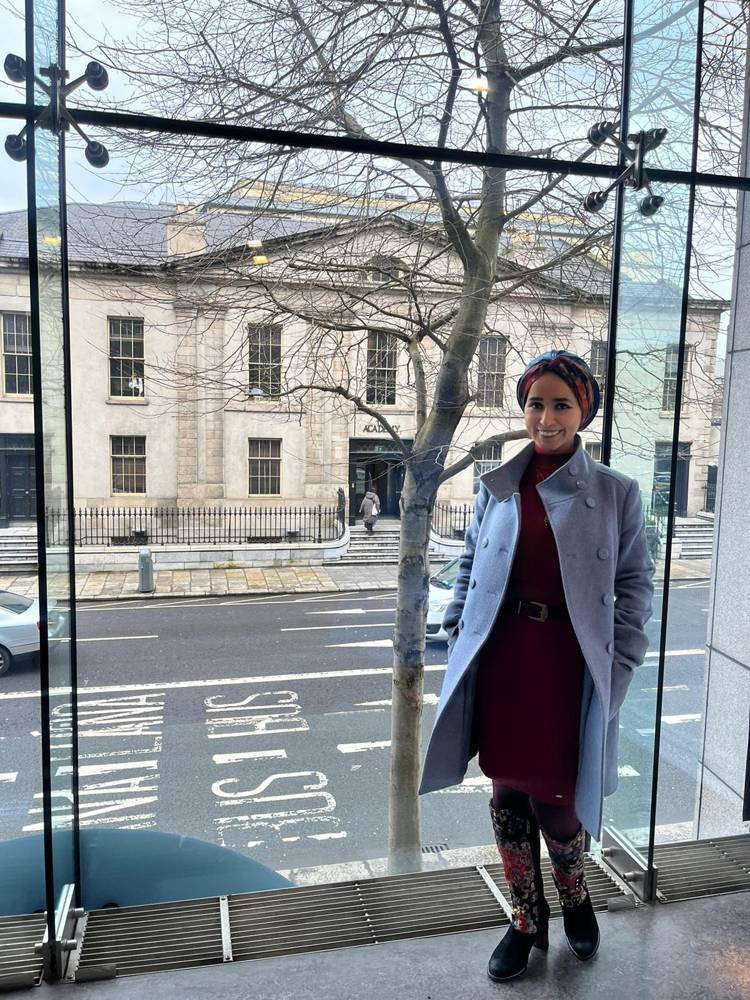
Dublin through the glass — Georgian architecture outside the venue
VenueDublin through the glassGeorgian architecture outside the venue
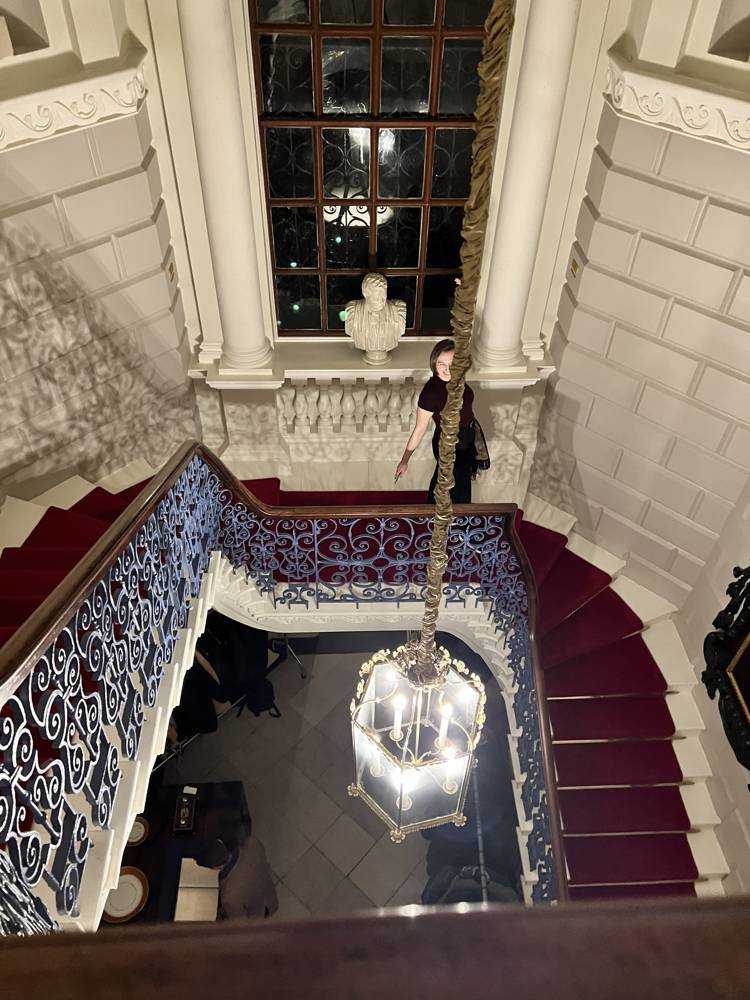
Evening reception — Historic staircase and chandelier
VenueEvening receptionHistoric staircase and chandelier
Evening in Dublin — Lanterns after the sessions
VenueEvening in DublinLanterns after the sessions
The field notebook — Ideas captured through the week
NotebookThe field notebookIdeas captured through the week

Networks & Knowledge Transfer

How the network works: sixteen years inside the international neuroscience societies — as member, council member and workshop organizer — is where collaborations, co-authors and training opportunities have come from.

Society service

Council member of the Mediterranean Neuroscience Society (2015–2019), organizer of scientific workshops in Egypt, France and Germany, and a product of the IBRO and FENS training schools that now fund the next generation.

Computational lineage

Trained in computational neuroscience through the FENS–IBRO and Kemali–IBRO schools and the CNRS Bordeaux internship; Peter Dayan among the formative mentors who shaped the modeling approach and the habit of critical thinking.

Ongoing collaborative vectors
Cognitive Flexibility NetworksAutonomic Self-Regulation FrameworksPrefrontal Cognitive ControlPredictive Error ModelingConsortium bid preparationHeuristic Risk EvaluationBehavioral Risk ModelingSystemic Bias Mitigation

Organizational Leadership

  • Three competitive funding bids to BMBF, DFG and ERC programs as Principal and Co-Investigator
  • Program design lead for two cross-disciplinary decision-science learning programs
[ S ]GROUP [ S ] ➔ STRATEGIC ADVISORY & OUTLET CHANNELS6 sub-rows

Chaired Symposia & Conference Talks

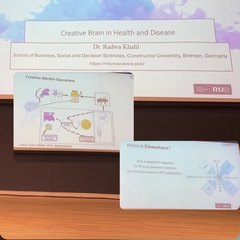
  1. Oct 2023Regulation of Cognitive Control from Rodents to Primates and HumansKhalil, R*. Chair and Speaker of the symposium "Regulation of Cognitive Control from Rodents to Primates and Humans". Entitled talk "Inhibitory Control and Creative Performance in Humans" at the 9th MNS meeting, Carthage, Tunisia.Symposium talk — Presenting “Inhibitory Control and Creative Performance in Humans” — Herrmann Brain Dominance Instrument slideCreative mental operations — Cross‑hemispheric communication and the three creative network modelsSymposium speakers — With the speakers of “Regulation of Cognitive Control from Rodents to Primates and Humans”Closing the session — Speakers in front of the translational‑levels slide
  2. Jun 2022Signatures of Neural Mechanisms and Neuroplasticity Underpinning Creative ThinkingKhalil, R*. Entitled talk "Signatures of Neural Mechanisms and Neuroplasticity Underpinning Creative Thinking" at the 8th MNS meeting, Dubrovnik, Croatia.
  3. Sep 2021Cross-disciplinary Perspectives on NeuroDesignSymposium "Cross-disciplinary Perspectives on NeuroDesign", Co-chair with Christoph Lattemann. Entitled talk "NeuroDesign – A Research Field at the Intersection of Neuroscience, Design Thinking, and Business" at the Marconi Institute for Creativity (MIC) Conference, Bologna, Italy.
  4. Jun 2019Systems and Neural Mechanisms Underlying Creative Performance and InnovationEntitled Symposium "Systems and Neural Mechanisms Underlying Creative Performance and Innovation", Co-chair with Ben Godde. Entitled talk, "Creativity and Emotion". Symposium presented at the 7th MNS meeting, Marrakech, Morocco.
  5. Jul 2017Expression and Inhibition of Conditioned FearKhalil, R*. Speaker in the symposium "Expression and Inhibition of Conditioned Fear". Entitled talk "Learning categorization of fear and safety learning through experimental and computational eyes" at the 6th MNS meeting, Malta.
  6. Oct 2012Synaptic Plasticity in Learning and Memory: Experimental and Computational ApproachesKhalil, R*. Speaker in the symposium "Synaptic Plasticity in Learning and Memory: Experimental and Computational Approaches". Entitled talk "A connectionist approach to decision making in the basal ganglia" at the 4th MNS meeting, Istanbul, Türkiye.

Invited Talks & Panels

  1. Nov 2024Kreativität – Motor des LebensInvited talk at the symposium “Kreativität – Motor des Lebens” (Creativity – the Engine of Life), Klinik für Psychosomatische Medizin und Psychotherapie, LWL-Universitätsklinikum der Ruhr-Universität, Bochum, Germany · over 270 participants.Speakers’ dinner after the symposium Kreativität – Motor des Lebens, Bochum
  2. Nov 2024Global South Arts and Health WeekInternational Convening, Doha, Qatar.
  3. Aug 2024The Origin of Creativity in Ancient EgyptPanel discussion on the origin of creativity in Ancient Egypt, Histories Seminar, Goethe Universität, Frankfurt, Germany.
  4. Jun 2024Diverse Definitions of Creativity & the Significance of Embracing DiversityOnline discussion on diverse definitions of creativity and the significance of embracing diversity, Three Days of Design festival, Copenhagen, Denmark.
  5. Sep 2023The Emotional Antecedents of Insight: A Physiological ExplorationKhalil, R*. Talk "The Emotional Antecedents of Insight: A Physiological Exploration" at the Marconi Institute for Creativity Conference, Trieste, Italy.
  6. Jun 2018Spiking Neural Network ModelsKhalil, R*. Talk "Spiking Neural Network Models" at the Morella Workshop, Cognition & Emotion Tools, Morella, Spain.
  7. Mar 2018Computational Neuroscience ApproachesKhalil, R*. Talk "Computational Neuroscience Approaches" at SRH, the Mobile University, Heidelberg, Germany.

Invited Commentary

  • Invited commentary for Science Bulletin on the ADHD ‘brainality landscape’ brain-chart study (Liu et al., 2026) — translating a large-scale neuroimaging result into what it means for attention, creativity and practice.

Journal & Grant Reviewing

  1. Mar 2021 – PresentReviewer for Scientific Journals (Q1)Reviewer for top‑tier journals · 85+ articlesThese journals cover diverse topics in neuroscience and psychology.
  2. Mar 2023 – PresentReviewer for Grant ProposalsFrench National Research Agency (ANR) · German Research Foundation (DFG)

Editorial Leadership & Ad Hoc Review

Editorial Leadership Frontiers appointments
Review Editor
  • Frontiers in Computational Neuroscience
  • Frontiers in Psychology [Cognitive Science and Psychology for Clinical Settings]
Frontiers Topic Editor
  • Methods and Applications in Cognitive SciencePadakannaya, P., Puvia, E., & Khalil, R. (2023). Methods and applications in cognitive science. Frontiers in Psychology, 14, 1321214.
  • Exploring Goal-Directed Behavior Through Creativity: Perspectives from Psychology, Neuroscience, and PsychiatryChen, C., Moradi, H., Vahid, L. K., & Khalil, R. (2024). Exploring goal-directed behavior through creativity: perspectives from psychology, neuroscience, and psychiatry. Frontiers in Psychology, 15, 1407344.
Ongoing Editorial
Ad Hoc Reviews by Journal 44 global reviews
  • American Psychologist7×
  • Patterns2×
  • PLOS One1×
  • Journal of Autism3×
  • Psychology of Aesthetics, Creativity, and the Arts6×
  • Journal of Creativity Research3×
  • iScience2×
  • Nature Mental Health3×
  • Journal of Creative Behavior4×
  • Neurocomputing1×
  • Nature Communications3×
  • Nature Human Behaviour1×
  • Brain Stimulation1×
  • Scientific Reports2×
  • European Journal of Neuroscience2×
  • Neuroscience3×
Frontiers Reviews by Journal 41 reviews
  • Frontiers in Computational Neuroscience16×
  • Frontiers in Psychology15×
  • Frontiers in Human Neuroscience3×
  • Frontiers in Neuroscience3×
  • Frontiers in Neurology2×
  • Frontiers in Integrative Neuroscience1×
  • Frontiers in Pharmacology1×
SELECTED PUBLICATIONS — HIGH-IMPACT SCHOLARLY INFLUENCEDual-Axis Tracker · 3 tracks
Track 01🧠 NEUROBIOLOGICAL DYNAMICS & HUMAN ADAPTABILITY
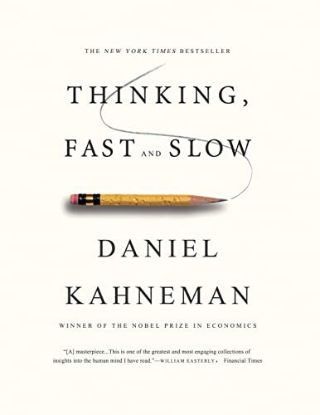
European Journal of Neuroscience (2025) — Dynamic Neurobiological Adaptability Framework reframing Kahneman fast vs slow systems under corporate uncertainty.
Outbound Verification[ European Journal of Neuroscience ]
Track 02🤖 COMPUTATIONAL MODELING & ASSOCIATIVE COGNITION
Journal of Creative Behavior & Neurocomputing (2024) — Co-developed and coded custom Neurocomputational and Hopfield Neural Network (HNN) models mapping transitions to adaptive thinking.
Track 03🫀 COGNITIVE DIVERSITY & INNOVATION ADVISORY SYSTEMS
iScience & Neuroscience & Biobehavioral Reviews (2026) — Leading cross-border projects on ADHD-related attention patterns and brain networks shared by pain and creativity.
Verified Impact · Syndication Path📰 Mass-Media Syndication: Validated across Inc. Magazine, AAAS EurekAlert!, SciTechDaily, and ScienceDaily.
Featured Framework · Figs. 4 – 8

Creative Therapy in Health and Disease — Pathways, Plasticity and the Interdisciplinary Bridge

Khalil & Demarin · CNS Neuroscience & Therapeutics 30(3) (2024) · doi:10.1111/cns.14266 ↗

Figure 4 — creativity modes on cognitive–emotional and spontaneous–deliberate axes: scientific creativity versus musical, literary, visual‑artistic and kinesthetic creativity, with switches within one modality and between two Figure 5 — brain–body pathways of creative activity: blood–brain barrier, HPA axis and autonomic nervous system, muscles, visceral organs, neurotransmitters, catecholamines and growth factors Figure 6 — brain, HPA axis, and sympathetic and parasympathetic nervous systems during movement and stress, with cortisol and neural pathways Figure 7 — creativity domains (musical, visuospatial, kinesthetic) and their effects via brain plasticity: Mozart‑effect theory, musical training and improvisation, disorders of music perception, blind artists, perception, proprioception, interoception Figure 8 — creative therapy as the bridge between neuroscientists and clinicians ⤢ enlarge

Fig. 4 · Khalil, R., & Demarin, V. (2024). Creative therapy in health and disease: Inner vision. CNS Neuroscience & Therapeutics, 30(3), e14266. doi:10.1111/cns.14266

Creativity modes (Fig. 4)

Creative acts differ in kind: scientific creativity sits toward the cognitive–deliberate corner, while musical, literary, visual‑artistic and kinesthetic creativity reach into the emotional and spontaneous. Switching within one modality and between two is itself a trainable skill.

Why it matters for strategyA therapy — or a program — must be matched to the mode it is trying to move. Naming the mode first is what turns “be more creative” into a specification.
Featured Framework · Fig. 5

Pain as Muse — How Creative Acts Flourish in the Shadow of Struggle

Khalil, Frühholz & Landry · Neuroscience & Biobehavioral Reviews (2026) · doi:10.1016/j.neubiorev.2026.106650 ↗

Figure 5 — (A) overarching framework linking interoception and body regulation, mental states and mental spaces, bottom‑up and top‑down systems and neuromodulators; (B) elements of the framework: three systems, dopamine and noradrenaline, adaptive gain; (C) age‑related framework: exploitation–exploration trade‑off, attention modulation, reward anticipation ⤢ enlarge
One framework, three lenses

How pain and creativity share a neural substrate: the body’s interoceptive signals, the mental states they shape, and the mental spaces in which creative acts are composed — tuned by neuromodulators and the balance of bottom‑up and top‑down control.

Why it matters for strategyStruggle is not the opposite of creative output; it is one of its inputs. Designing conditions that convert friction into exploration is a measurable, trainable lever.
Video abstract title frame — Pain as muse, Constructor University · University of Zurich · University of Oslo · Université de Bordeaux · CNRS▶7:20 Supplementary video abstractWatch the framework in motionFour institutions, four countries — Germany, Switzerland, Norway, France · MP4 · opens at the publisher ↗
Featured Framework · Fig. 2

Attention Unleashed — Creative Therapy for Thoughtful ADHD

Bou Sader Nehme, Macaluso & Khalil · iScience (2026) · doi:10.1016/j.isci.2026.115387 ↗

Figure 2 — a triangle joining Neurology (cognitive and behavioral assessments, clinical assessment, brain potential), Art‑based research (music, visual arts methods, photovoice, community‑based arts participation) and Neuroscience (behavioral, psychological, neurofunctional, neurogenetic, neurochemical), overlapping at the center ⤢ enlarge
Three disciplines, one triangle

A translational map for ADHD: clinical neurology, art‑based research and neuroscience each bring their own instruments, and creative therapy is designed where the three circles overlap — so attention is treated as a resource to be redirected, not only a deficit to be suppressed.

Why it matters for strategyNeurodivergent attention is an under‑used innovation asset. The framework shows how to measure it on three independent axes before intervening — the same discipline a client expects before a transformation program.
Video S1 title frame — Attention unleashed: Creative therapy for thoughtful attention-deficit/hyperactivity disorder, with the flags of France, Lebanon and Germany▶7:22 Supplementary Video S1 · video recapWatch the framework in motionThree countries — France, Lebanon, Germany · MP4 · opens at the publisher ↗
Featured Framework · Figs. 1, 7 & 8

Emotion Induction Modulates Neural Dynamics Related to the Originality of Ideational Creativity

Khalil, Frühholz & Godde · Human Brain Mapping (2025) · doi:10.1002/hbm.70182 ↗

Figure 1 — experimental paradigm: emotion induction (happy, neutral, sad) with SAM rating, then the Alternative Uses Task under EEG recording; trial timeline: fixation cross, stimulus presentation, idea generation, response, fixation Figure 8 — summary: ideational originality is higher after happy and sad than neutral induction; cross‑frequency coupling between frontal and parietal sites, left and right, differs across happy, neutral and sad states (delta, theta, alpha phase with low and high gamma amplitude) Figure 7 — exploratory gender profiles of neural dynamics: (a) males and (b) females; Pearson correlations between phase–amplitude coupling values along the left‑frontal–left‑parietal, right‑frontal–right‑parietal, left‑frontal–right‑parietal and right‑frontal–left‑parietal paths for happy, neutral and sad induction, with originality means inset ⤢ enlarge

Fig. 1 · Khalil, R., Frühholz, S., & Godde, B. (2025). Emotion induction modulates neural dynamics related to the originality of ideational creativity. Human Brain Mapping. doi:10.1002/hbm.70182

Mood in, originality out — measured in the brain

Participants were put into a happy, neutral or sad state with film clips, rated their feeling, then generated unusual uses for everyday objects while EEG recorded the brain. Fig. 1 shows the paradigm; Fig. 8 the result.

Why it matters for strategyEmotional state is a controllable input to idea quality, and its effect can be measured rather than assumed. That turns “team mood” from a soft factor into a design parameter for innovation sessions.
Video abstract title card — Influence of Emotion Induction on Creative Thinking and Its Associated Neural Dynamics · Human Brain Mapping · Wiley▶1:38 Video abstract · Wiley Influence SeriesWatch the study in motion“Human emotions can be used as a tool to boost creativity — by encouraging playfulness or promoting deep focus” · opens at the publisher ↗

Metrics

Monograph · in development
Civilizational Resilience & Cognitive Governance

A monograph in development on civilizational resilience, historical cognitive blueprints and the neuro-behavioral dynamics of human survival and leadership evolution across centuries.

Civilizational ResilienceHistorical Cognitive BlueprintsLeadership Evolution

Co-Edited Volume

  • Co-editor: Female Pioneers from Ancient Egypt and the Middle East: On the Influence of History on Gender Psychology — Springer Nature (2021). Four chapters tracing women’s leadership from Hatshepsut to the scientists of modern Egypt, read through the lens of gender psychology.

Invited Chapter

  • Perspective chapter: ‘The Architecture of Possibility’ (the neuro-dynamics of creativity and imagination) — invited for a forthcoming Cambridge University Press edited volume.

Book Chapters & Edited‑Volume Contributions

  1. 2021

    Karim, A.A., Khalil, R., & Moustafa, A.A. (2021). Preface: Does history matter in gender psychology? In: Karim, A.A., Khalil, R., & Moustafa, A. (eds.) Female Pioneers from Ancient Egypt and the Middle East. Springer, Singapore. doi:10.1007/978-981-16-1413-2

  2. 2021

    Khalil, R., Karim, A.A., & Moustafa, A.A. (2021). Milestones of Egyptian women’s progress in education and science from the nineteenth century to the present. In: Karim, A.A., Khalil, R., & Moustafa, A. (eds.) Female Pioneers from Ancient Egypt and the Middle East. Springer, Singapore. doi:10.1007/978-981-16-1413-2_4

  3. 2021

    Karim, A.A., Al‑Jundi, H., & Khalil, R. (2021). Female pioneers in Islamic Middle Ages: A theological and psychological perspective. In: Karim, A.A., Khalil, R., & Moustafa, A. (eds.) Female Pioneers from Ancient Egypt and the Middle East. Springer, Singapore. doi:10.1007/978-981-16-1413-2_3

  4. 2021

    Khalil, R., & Karim, A.A. (2021). Septimia Zenobia: The inspiring queen of the Palmyrene Empire in Syria (240–c. 274 AD). In: Karim, A.A., Khalil, R., & Moustafa, A. (eds.) Female Pioneers from Ancient Egypt and the Middle East. Springer, Singapore. doi:10.1007/978-981-16-1413-2_2

  5. 2020

    Karim, A.A., Khalil, R., & Schmitt, M. (2020). Wald reloaded — Die Neuentdeckung des Waldes aus gesundheitspsychologischer Sicht (Forest reloaded — Rediscovering the forest from a health‑psychology perspective). Zeitschrift für Komplementärmedizin, 12(02), 24–30. doi:10.1055/a-1140-1148 German‑language · applied health psychology

  6. 2018

    Mandalka, G.J., Khalil, R., & Karim, A.A. (2018). Fit in 5 Minuten (Fit in 5 minutes). In: SRH Fernhochschule (ed.) Demografischer Wandel. Weiterbildung und Forschung der SRH Fernhochschule — The Mobile University. Springer, Wiesbaden. doi:10.1007/978-3-658-20384-9_3 German‑language · applied health psychology

  7. 2018

    Khalil, R., Moftah, M., Landry, M., & Moustafa, A.A. (2018). Models of dynamical synapses and cortical development. In Computational Models of Brain and Behavior (pp. 321–331). Wiley‑Blackwell. doi:10.1002/9781119159193.ch23

Research Pipeline Repository
Upcoming Research Pipelines

Forthcoming, in-preparation and in-submission manuscripts spanning interdisciplinarity, entrepreneurship, lifespan cognition and creative cognition. Entries move to Selected Publications on acceptance.

ForthcomingIn PreparationIn SubmissionIn Review

The live Instagram highlights dock is in the Knowledge Hub ↓, and LinkedIn sits among the verified registries there; the broadcast record follows below.

Global Thought Leadership & Public Broadcasts

E-Learning Masterclass · 2022
ZEIT Akademie E-Learning Masterclass (2022)
Official Module
Expertinnenvorstellung Kreativität: Dr. Radwa Khalil (Expert introduction on creativity: Dr. Radwa Khalil)
Core Philosophical Engine
„KREATIVITÄT BEGINNT MIT NEUGIER“ ↗Creativity Begins with Curiosity
Strategic Value
Featured expert in a ZEIT Akademie video course on creativity — translating neuroplasticity and cognitive flexibility into practical methods for professionals and a broad public audience.
ZEIT Akademie e-learning course cover showing Dr. Radwa Khalil with two fellow experts and a 'Jetzt starten' play button
ZEIT Akademie · Video Course„Kreativität – Mut zu neuen Lösungen“ (Creativity – Courage for New Solutions) · Dr. Radwa Khalil featured as creativity expert

🎥 View the ARTE "Unhappy" production slider & photo gallery ↗

Broadcast & Channels
Showreel · public science communication · 38 s · sound on

Translating neuroscience for public audiences

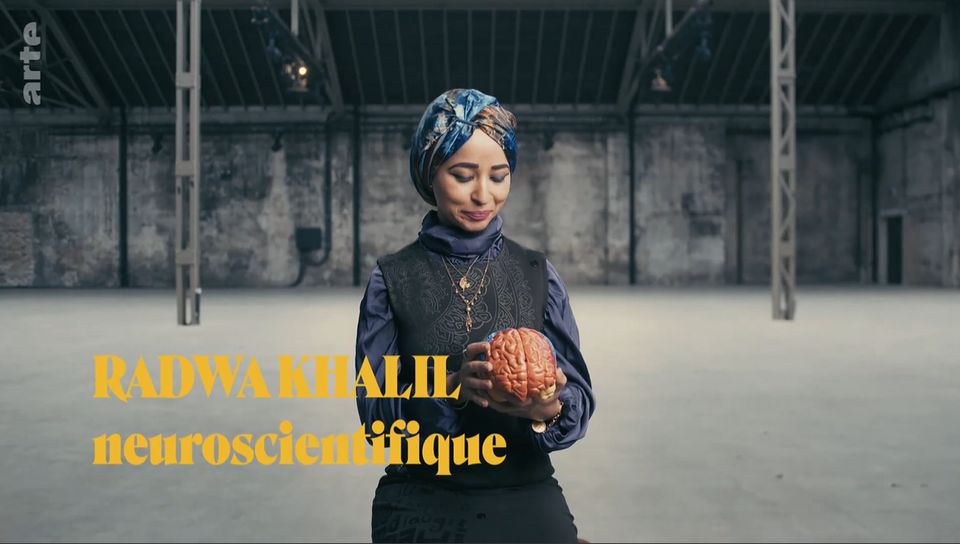
One reel across broadcast, e‑learning and documentary work — ARTE’s Unhappy and Die Pharaoninnen / Female Pharaohs, ZEIT Akademie’s Kreativität course (“Creativity”), and studio features — the record behind the outlets listed below.

Written, produced and narrated by Dr. Radwa Khalil · original work © Dr. Radwa Khalil
Selected Media Mentions · 2017 – Present20 outlets · each listed once
ZEIT AkademieE‑learningARTEBroadcastWeser‑KurierRegional pressAAASScience newsEurekAlert!Science wireMedical XpressScience newsNeuroscience NewsScience newsInformationsdienst Wissenschaft (idw)Science press serviceBiologie‑SeiteLife‑science tradeBionityLife‑science tradeLaborjournalLife‑science tradeLabrootsLife‑science tradeInc. MagazineBusiness pressScienceDailyScience newsSciTechDailyScience newsDeutsche Welle (DW)BroadcastConstructor TalksPodcastConstructor University NewsInstitutionalPabst Science PublishersReviewThe Recovered Life ShowPodcast
Organizations move fastest when computational rigor and human adaptability work together. That combination clears away ambiguity and turns transformation into something you can plan, not something you hope for.
— DR. RADWA KHALIL · BEHAVIORAL STRATEGIST · PHD NEUROSCIENTIST
Dr. Radwa Khalil — stylized portrait
Knowledge Hub

Insight Repository & Live Broadcast

The collaboration network on the left maps the research pillars and institutional ecosystems behind the work; recorded teaching sits on the right, and the written briefings follow beneath.

Collaboration Networks · Interactive 3D Globe
Drag to spin · click to zoom · scroll to zoom
Orthographic globe · auto-rotate 0.5
Collaboration & Concept Network
Drag to orbit · scroll to zoom · drag nodes
Selected nodeClick any node to load its research titles

Dr. Radwa Khalil (Neuroscience & Behavior)

Central anchor of the network. Every pillar below connects back through this node; the two bridging concepts sit where pillars overlap.

Broadcast Stream
Constructor Talks: The Neuroscience of Creativity with Dr. Radwa Khalil 📺 Constructor Talks: The Neuroscience of Creativity with Dr. Radwa Khalil — Click to watch the full episode.
Open Channel
Publication DomainsSelect a domain to filter the network

    Research Keyword Brain52 works · 40 keywords · click a node to open its domain
    Supplementary RecordConference Abstracts & Proceedings6 entries · 2015 → 2025
    1. 2025

      Khalil, R., Frühholz, S., & Landry, M. (2025). Is the interplay between creativity and pain reciprocal? Society for the Neuroscience of Creativity, Paris, France.

    2. 2024
      Khalil, R., Agnoli, S., Ross, W., DʼAnselmo, A., Scrimin, S., Rominger, C., & Kappas, A. (2024). Signal or consequence! How does insight affect emotion? International Society for Research on Emotion, Belfast, Northern Ireland.

    3. 2017

      Khalil, R., Godde, B., & Karim, A. (2017). P093 Transcranial cortex stimulation, neuroplasticity, and learning: An experimental and computational study. Clinical Neurophysiology, 128(3), e53–e54. doi:10.1016/j.clinph.2016.10.218

    4. 2017

      Karim, A., Khalil, R., Schneider, M., Lotze, M., Khedr, E., & Birbaumer, N. (2017). P111 Neurobiology of deception and moral cognition. Clinical Neurophysiology, 128(3), e68. doi:10.1016/j.clinph.2016.10.234
    5. 2016

      Hérice, C., Khalil, R., Moftah, M., Boraud, T., Guthrie, M., & Garenne, A. (2016). Decision‑making in a neural network model of the basal ganglia. Sixth International Symposium on Biology of Decision Making (SBDM 2016). hal‑01368504

    6. 2015

      Hérice, C., Khalil, R., Moftah, M., Boraud, T., Guthrie, M., & Garenne, A. (2015). Decision‑making mechanisms in a connectionist model of the basal ganglia. Multidisciplinary Conference on Reinforcement Learning and Decision Making (RLDM 2015). hal‑01206514

    Compliance & Verification Matrix

    Verified Scientific Registries

    Every title, year, and citation count on this page mirrors the official Google Scholar profile and can be cross-verified against the persistent researcher identifier ORCID 0000-0003-2632-8306, the Web of Science author record HJI-9279-2023, the Frontiers Loop index, and the ResearchGate portfolio. Each registry opens in a new tab.

    Public Broadcasting & E-Learning · Photo Gallery Grid2 production slots
    Dr. Radwa Khalil on location inside a painted tomb corridor during ARTE Television documentary filming
    Slot 01 🎥 ARTE Television Production Set (Science Documentary Filming Hub) On location for the ARTE/NDR documentary on Egypt's female pharaohs · Valley of the Kings tomb corridor Asset loaded · drop a new file to replace
    ZEIT Akademie course cover for Kreativität: Mut zu neuen Lösungen featuring Dr. Radwa Khalil
    Slot 02 🏫 ZEIT Akademie Studio Set (Advanced E-Learning Production Framework) ZEIT Akademie course "Kreativität — Mut zu neuen Lösungen" · masterclass cover with the faculty trio Asset loaded · drop a new file to replace
    Television Documentary Series · ARTE
    🎥 ARTE Television Production — 'Unhappy' Documentary Series

    Featured neuroscientific expert commentary across two core broadcast segments: S01E07: 'Schön und glücklich? | unhappy — Ronja von Rönne' & S01E04: 'Macht Kreativität glücklich? | unhappy' (Produced for ARTE TV and syndicated internationally).

    • Unhappy - Der kreative Mensch / Macht Kreativität glücklich? – Expert neurological insights on human happiness.
    • Unhappy - Das Versprechen der Schönheit / Schön und glücklich? – Explaining how the brain processes aesthetics and physical symmetry.
    • ARTE TV 'Unhappy' Series — On set, translating the neuroscience for the camera.
    • ARTE TV 'Unhappy' Series — On-screen credit: Radwa Khalil, neuroscientist, with the brain model used to explain emotion on set.
    • ARTE TV 'Unhappy' Series — Walking through the emotional circuitry of happiness for the camera.
    Television Documentary Special · NDR / ARTE
    🎥 ARTE Television Special — 'Die Pharaoninnen' (90 Min. HD Documentary Film)

    Featured contributor to the NDR/ARTE documentary on Egypt’s female pharaohs: how women held and exercised power in antiquity, and what the psychology of leadership, monumental architecture and cosmic order says about decision-making under uncertainty today (90-minute cross-border production, 2026).

    [ Watch Direct Feature Segment (01:09:35) 🔗 ]
    E-Learning Masterclass · ZEIT Akademie · 2022
    📺 ZEIT Akademie E-Learning Systems

    📺 ZEIT Akademie E-Learning Systems — Designed and filmed the professional video course 'Kreativität – Mut zu neuen Lösungen'. Demonstrates how neurobiological networks map creative thought and how emotions, rewards, anxiety, or stress directly impact executive judgment and corporate organizational environments.

    [ Access Video Course Profile 🔗 ]
    Research Shorts · YouTube · Laboratory Insight
    📺 Research Shorts — Emotional Dynamics & Brain Regulation Core

    Laboratory insight from Dr. Radwa Khalil on how induced emotion shapes the brain dynamics of creative ideation — distinct profiles across genders, and how a sad state, paired with attentional focus and persistence, can still carry original ideas.

    [ Watch Short Video 🔗 ]
    Research Shorts · YouTube · Adaptive Decision-Making
    📺 Research Shorts — Adaptive Decision Models

    Laboratory insight from Dr. Radwa Khalil on her European Journal of Neuroscience and Human Brain Mapping papers: a flexible, non-binary framework for adaptive decision-making that integrates context and individual traits, with functional connectivity tracked by multi-channel EEG during five-minute emotion-induction tasks.

    [ Watch Short Video 🔗 ]
    Reading Room · recommended books

    The shelf behind the work

    Forty‑one books across eight shelves: the texts I return to for neuroscience, signal and data, computation, robotics, statistics, the science of creativity, and leadership under pressure. Choose a shelf, then turn any cover to read why that book earned its place.

    41 books · 8 shelves · click a cover to turn it

    These are the books that accompanied me through my journey of learning. I value them more than ever now, as the place where I consolidate knowledge and carry it into practice. They shaped the way I reason and think critically — a steadiness that matters most in a time when technology changes faster than we can follow.

    — Dr. Radwa Khalil
    On my deskWhat I am reading now — and what comes next · select a book to open it on the shelf
    Cover — Neuroscience
    NeuroscienceDale Purves, Leonard White, George J. Augustine, et al.1st ed. 1997 · 7th ed. 2024Oxford University Press / Sinauer
    Core focus

    Comprehensive functional neuroanatomy and sensory/motor systems.

    Why it matters

    An excellent interactive visual resource featuring digital 3D brain models (Sylvius), video tutorials, and study tools.

    Find the book ↗
    Cover — Sensation & Perception, Third Edition
    Sensation & PerceptionJeremy M. Wolfe, Keith R. Kluender, Dennis M. Levi, et al.3rd ed. 2012 · 7th ed. 2024Oxford University Press / Sinauer
    Core focus

    Every sense in one framework — vision, audition, touch, taste and smell, from receptor physiology to perceptual organization, attention and multisensory integration.

    Why it matters

    The standard upper‑level text on how the world reaches the mind; the foundation beneath any argument about attention, design or decision‑making that starts with what people actually perceive.

    Find the book ↗
    Cover — Principles of Neural Science
    Principles of Neural ScienceEric R. Kandel, James H. Schwartz, and Thomas M. Jessell1st ed. 1981 · 6th ed. 2021McGraw‑Hill
    Core focus

    Molecular, biological, and systemic mechanics of the nervous system.

    Why it matters

    Universally recognized as the “Bible of neuroscience” — highly rigorous and deeply detailed.

    Find the book ↗
    Cover — Thinking, Fast and Slow
    Thinking, Fast and SlowDaniel Kahneman2011Farrar, Straus and Giroux
    Core focus

    Dual‑process psychology, decision theory, and cognitive biases.

    Why it matters

    The definitive look at fast, emotional shortcuts (System 1) versus slow, analytical focus (System 2).

    Find the book ↗
    Cover — The Great Mental Models, Volume 1
    The Great Mental Models (Vols. 1–4)Shane Parrish (Farnam Street)Vol. 1 2019 · Vols. 1–4 Penguin ed. 2024Latticework / Penguin Portfolio
    Core focus

    A multi‑volume collection of timeless cognitive blueprints — inversion, first‑principles thinking, second‑order effects, probabilistic reasoning — distilled from physics, biology, economics and mathematics.

    Why it matters

    Curated by the creator of Farnam Street; the clearest working toolkit for upgrading general reasoning and problem‑solving — the mental‑model vocabulary consultants and scientists share.

    Find the book ↗
    Cover — The Brain That Changes Itself
    The Brain That Changes ItselfNorman Doidge2007Viking / Penguin
    Core focus

    Neuroplasticity, sensory restoration, and behavioral adaptation.

    Why it matters

    Fascinating, accessible clinical stories showing how human brain frameworks physically rewire themselves.

    Find the book ↗
    Cover — Psychology
    Psychology (14th Edition)David G. Myers, C. Nathan DeWall, and June Gruber14th ed. · ©2024Macmillan Learning / Worth Publishers
    Core focus

    The full map of the discipline — biological bases, sensation and perception, learning, memory, thinking, motivation, emotion, personality, social and clinical psychology.

    Why it matters

    The standard introductory text, now in its fourteenth edition; its cover of interlocking human profiles is itself a statement about cognitive diversity — no two minds the same.

    Macmillan Learning ↗
    Cover — Biopsychology
    Biopsychology (11th Edition)John P. J. Pinel and Steven J. Barnes11th ed. 2021 · 12th ed. 2026Pearson
    Core focus

    Behavioral neuroscience from the neuron up — neuroanatomy, sensory and motor systems, brain damage and plasticity, sleep, drugs, emotion, and the biology of learning and memory.

    Why it matters

    The most readable biopsychology text in print: rigorous, clinical‑case‑driven and visually generous, with the 11th edition’s cover — a thinker releasing a strand of neurons — a fitting emblem of human brain mapping.

    Pearson catalog ↗
    Cover — Functional Magnetic Resonance Imaging
    Functional Magnetic Resonance ImagingScott A. Huettel, Allen W. Song, and Gregory McCarthy1st ed. 2004 · 3rd ed. 2014Sinauer / Oxford University Press
    Core focus

    Magnetic resonance physics, the BOLD response, and experimental fMRI setups.

    Why it matters

    Widely considered the best introductory textbook for understanding the mechanics of functional brain imaging.

    Find the book ↗
    Cover — Analyzing Neural Time Series Data: Theory and Practice
    Analyzing Neural Time Series Data: Theory and PracticeMike X Cohen2014MIT Press
    Core focus

    Signal processing, time‑frequency analysis, and coding datasets for EEG.

    Why it matters

    The ultimate computational guide for extracting structured features from raw brainwave data streams using programmatic scripting.

    Find the book ↗
    Cover — Handbook of Functional MRI Data Analysis
    Handbook of Functional MRI Data AnalysisRussell A. Poldrack, Jeanette A. Mumford, and Thomas E. Nichols2011Cambridge University Press
    Core focus

    Statistical modeling, preprocessing pipelines, and GLM analysis.

    Why it matters

    Essential reading for data engineers transitioning into neuroimaging data architecture.

    Find the book ↗
    Cover — Niedermeyer’s Electroencephalography: Basic Principles, Clinical Applications, and Related Fields
    Niedermeyer’s Electroencephalography: Basic Principles, Clinical Applications, and Related Fieldsedited by Donald L. Schomer and Fernando Lopes da Silva6th ed. 2011 · 7th ed. 2017Wolters Kluwer / Lippincott Williams & Wilkins
    Core focus

    Comprehensive clinical EEG tracking, epilepsy mapping, and electrical field potentials.

    Why it matters

    The classic, massive historical encyclopedic reference text for clinical and scientific EEG interpretation.

    Find the book ↗
    Cover — Molecular Biology of the Cell
    Molecular Biology of the CellBruce Alberts, Rebecca Heald, Alexander Johnson, et al.1st ed. 1983 · 7th ed. 2022W. W. Norton (formerly Garland Science)
    Core focus

    Sub‑microscopic cell architecture, genetics, and metabolic signal transduction.

    Why it matters

    The gold‑standard textbook explaining the exact molecular frameworks that keep biological neurons communicating.

    Find the book ↗
    Cover — Essential Cell Biology
    Essential Cell BiologyBruce Alberts, Karen Hopkin, Keith Roberts, et al.1st ed. 1997 · 6th ed. 2023W. W. Norton (formerly Garland Science)
    Core focus

    Simplified, highly visual cellular logic paths.

    Why it matters

    A highly accessible entry point covering core biology concepts without the overwhelming encyclopedic density.

    Find the book ↗
    Cover — Theoretical Neuroscience: Computational and Mathematical Modeling of Neural Systems
    Theoretical Neuroscience: Computational and Mathematical Modeling of Neural SystemsPeter Dayan and L. F. Abbott2001 · paperback 2005MIT Press
    Core focus

    Mathematical modeling of biological circuits and neural population coding.

    Why it matters

    The cornerstone textbook of computational neuroscience, bridging the gap between biology and computer science.

    Find the book ↗
    Cover — Dynamical Systems in Neuroscience: The Geometry of Excitability and Bursting
    Dynamical Systems in NeuroscienceEugene M. Izhikevich2007 · paperback 2010MIT Press · Computational Neuroscience series
    Core focus

    Phase‑plane geometry, bifurcations and the dynamical classification of neurons — how mathematical structure models individual spiking neurons and groups of them.

    Why it matters

    Highly regarded for making the geometry of neural dynamics intuitive without sacrificing rigor; the bridge between the biophysics of a neuron and the simple models used in large‑scale simulation.

    Find the book ↗
    Cover — Smarter Than Us: Superintelligence and the Future of Humanity
    Smarter Than Us: Superintelligence and the Future of HumanityGeoffrey Hinton and Patchen Barssforthcoming · 26 Jan 2027 · hardbackAllen Lane / Penguin Random House
    Core focus

    Artificial neural network limits, biological vs. digital scaling, and alignment security.

    Why it matters

    The crucial artificial intelligence framework book written by the Nobel laureate known as the “Godfather of AI”.

    Find the book ↗
    Cover — Understanding Machine Learning: From Theory to Algorithms
    Understanding Machine Learning: From Theory to AlgorithmsShai Shalev‑Shwartz and Shai Ben‑David2014Cambridge University Press
    Core focus

    Mathematical bounds, proofs, and foundational geometric theories of prediction engines.

    Why it matters

    Highly respected technical work mapping out the pure mathematical proofs underpinning algorithmic learning.

    Find the book ↗
    Cover — Elements of Computer Networking: An Integrated Approach
    Elements of Computer Networking: An Integrated ApproachA. Damodaram and M. Sreenivasa RaoCareerMonk editionCareerMonk Publications
    Core focus

    Protocols, formal verification metrics, and distributed routing systems.

    Why it matters

    A clear, integrated treatment of networking fundamentals — protocols, routing and distributed systems — the shared vocabulary needed to structure large distributed data pipelines.

    Find the book ↗
    Cover — Humanoid Robots and Physical AI: Reshaping Work, Society, and Human Purpose
    Humanoid Robots and Physical AI: Reshaping Work, Society, and Human Purposeedited by Ken Huang, Chunxiao Xing, and Yuyan Duanedited volumeSpringer
    Core focus

    Physical actuators, agentic design, sensor fusion, and sim‑to‑real reinforcement learning.

    Why it matters

    Provides a look at the modern machine learning systems driving advanced bipedal platforms.

    Find the book ↗
    Cover — Introduction to Humanoid Robotics
    Introduction to Humanoid RoboticsShuuji Kajita, Hiroshi Hirukawa, Kensuke Harada, and Kazuhito Yokoi2014 · STAR vol. 101Springer
    Core focus

    Bipedal locomotion kinematics, ZMP control, and center‑of‑mass balance algorithms.

    Why it matters

    The definitive, classical engineering textbook for modeling human‑like movement dynamics in physical spaces.

    Find the book ↗
    Cover — Statistical Inference
    Statistical InferenceGeorge Casella and Roger L. Berger1st ed. 1990 · 2nd ed. 2002Duxbury / Cengage
    Core focus

    Mathematical estimation, hypothesis tracking, and data variance bounds.

    Why it matters

    The ultimate rigorous reference text for data scientists looking to separate meaningful variables from data interference.

    Find the book ↗
    Cover — Statistical Rethinking: A Bayesian Course with Examples in R and Stan
    Statistical Rethinking: A Bayesian Course with Examples in R and StanRichard McElreath1st ed. 2015 · 2nd ed. 2020CRC Press / Chapman & Hall
    Core focus

    Causal data inference, multi‑level models, and practical programming loops.

    Why it matters

    A brilliant modern book focusing on practical data mapping that teaches engineers how to handle conflicting parameters natively.

    Find the book ↗
    Cover — The Elements of Statistical Learning
    The Elements of Statistical LearningTrevor Hastie, Robert Tibshirani, and Jerome Friedman1st ed. 2001 · 2nd ed. 2009Springer
    Core focus

    High‑level predictive modeling, data parsing, and supervised learning math.

    Why it matters

    The foundational text for anyone developing complex machine learning networks.

    Find the book ↗
    Cover — The Signal and the Noise: Why So Many Predictions Fail — But Some Don’t
    The Signal and the Noise: Why So Many Predictions Fail — But Some Don’tNate Silver2012Penguin Press
    Core focus

    Bayesian probability application and practical data forecasting logic.

    Why it matters

    A popular book that teaches general audiences how to separate true indicators from chaotic environmental variables.

    Find the book ↗
    Cover — Designing Data‑Intensive Applications
    Designing Data‑Intensive ApplicationsMartin Kleppmann1st ed. 2017 · 2nd ed. 2025O’Reilly Media
    Core focus

    Database architectures, stream processing, and scalable storage engines.

    Why it matters

    Crucial industry‑standard reading for backend software engineering and database administrators.

    Find the book ↗
    Cover — Naked Statistics: Stripping the Dread from the Data
    Naked Statistics: Stripping the Dread from the DataCharles Wheelan2013W. W. Norton
    Core focus

    Everyday statistical literacy and real‑world numbers without dense algebra.

    Why it matters

    An entertaining, humorous book perfect for making complex analytics intuitive to non‑specialist readers.

    Find the book ↗
    Cover — How to Lie with Statistics
    How to Lie with StatisticsDarrell Huff1954W. W. Norton
    Core focus

    Identifying manipulated graphics and visual data deception.

    Why it matters

    A brief classic that teaches basic data literacy and skepticism.

    Find the book ↗
    Cover — Affective Neuroscience: The Foundations of Human and Animal Emotions
    Affective Neuroscience: The Foundations of Human and Animal EmotionsJaak Panksepp1998Oxford University Press
    Core focus

    Deep subcortical brain systems governing mammalian emotional drives.

    Why it matters

    Written by the pioneer who coined the term “affective neuroscience,” explaining the deep origins of human feeling.

    Find the book ↗
    Cover — Handbook of Psychophysiology
    Handbook of PsychophysiologyJohn T. Cacioppo, Louis G. Tassinary, and Gary G. Berntson1st ed. 2000 · 4th ed. 2017Cambridge University Press
    Core focus

    Biometric recording protocols for EDA, HRV and muscle tension.

    Why it matters

    The comprehensive technical guide explaining exactly how to hook up, read, and isolate physical autonomic nervous system responses.

    Find the book ↗
    Cover — The Oxford Handbook of Affective Computing
    The Oxford Handbook of Affective Computingedited by Rafael A. Calvo, Sidney K. D’Mello, Jonathan Gratch, and Arvid Kappas2015 · Oxford Library of PsychologyOxford University Press
    Core focus

    Emotion sensing, affect modeling and affect‑aware interaction — where psychophysiology meets machine learning and human–computer interaction.

    Why it matters

    The reference volume for building systems that read and respond to human emotion; co‑edited by Arvid Kappas, a close collaborator on the neuroscience of creativity.

    Find the book ↗
    Cover — Gastrophysics: The New Science of Eating
    Gastrophysics: The New Science of EatingCharles Spence · foreword by Heston Blumenthal2017 · paperback 2018Viking / Penguin
    Core focus

    How the brain integrates crossmodal sensory information to construct flavor — and the hidden psychological architecture by which plate color, cutlery weight and auditory pitch sway subconscious choices, dining pace and spending.

    Why it matters

    An international bestseller by the Oxford crossmodal‑research pioneer: the clearest demonstration that perception is multisensory by design — a principle that reaches far beyond the table into product, service and experience design.

    Find the book ↗
    Cover — The Neuroscience of Creativity
    The Neuroscience of CreativityAnna Abraham2018Cambridge University Press
    Core focus

    Multidisciplinary empirical data mapping human creative generation.

    Why it matters

    The premier scientific handbook exploring the neurological basis of innovative thought.

    Find the book ↗
    Cover — 1001 Inventions: The Enduring Legacy of Muslim Civilization
    1001 Inventions: The Enduring Legacy of Muslim CivilizationSalim T. S. al‑Hassani, Chief Editor3rd ed. 2012National Geographic · official companion to the exhibition
    Core focus

    Historic scientific systems, mechanical engines, and medical advancements.

    Why it matters

    A visual National Geographic publication charting the critical historical foundations laid during the Islamic Golden Age.

    Find the book ↗
    Cover — The Nature of Technology: What It Is and How It Evolves
    The Nature of Technology: What It Is and How It EvolvesW. Brian Arthur2009Free Press / Simon & Schuster
    Core focus

    Combinatorial mechanics of physical and software engineering systems.

    Why it matters

    A philosophical look at how human invention naturally evolves by continually recombining existing technical structures.

    Find the book ↗
    Cover — Big Trust by Dr Shadé Zahrai
    Big Trust: Rewire Self‑Doubt, Find Your Confidence and Fuel SuccessDr Shadé Zahrai with Fayçal Sekkouah2026 · read early this yearVermilion / Penguin Random House
    Core focus

    Self‑leadership: a research‑based system for replacing recurring self‑doubt with durable self‑trust — limiting beliefs, people‑pleasing, perfectionism, comparison and impostor thinking, and how to turn emotion into confidence.

    Why it matters

    Recommended for leadership and self‑leadership. Finished early this year: a practical companion to the Four Pillars’ first pillar, cognitive mastery and self‑trust — the inner discipline that lets a leader hold a decision under pressure.

    Find the book ↗
    Cover — Hit Refresh by Satya Nadella
    Hit Refresh: The Quest to Rediscover Microsoft’s Soul and Imagine a Better Future for EveryoneSatya Nadella with Greg Shaw and Jill Tracie Nichols · foreword by Bill Gates2017 · reading nowHarper Business / HarperCollins
    Core focus

    How a chief executive resets a company’s culture — from “know‑it‑all” to “learn‑it‑all” — with empathy treated as a leadership instrument, and a technology strategy (cloud, AI, mixed reality) built on that reset.

    Why it matters

    The clearest first‑person account of a transformation led through mindset rather than restructuring alone: psychological safety, growth mindset and clarity of purpose as the levers, which is the mechanism the Ecosystem simulator above models.

    Find the book ↗
    Cover — My Life in Full by Indra Nooyi
    My Life in Full: Work, Family, and Our FutureIndra Nooyi2021 · next on the deskPortfolio / Penguin Random House
    Core focus

    Twelve years as chair and CEO of PepsiCo told from the inside — reshaping a global portfolio under “Performance with Purpose”, and the realities of leading while carrying a family.

    Why it matters

    A woman who led a global company through a decade of transformation, writing candidly about decisions, resistance and care: evidence for the “Women who lead” thread above, and a case study in holding a long‑horizon strategy against quarterly pressure.

    Find the book ↗
    Cover — Creativity, Inc. by Ed Catmull
    Creativity, Inc.: Overcoming the Unseen Forces That Stand in the Way of True InspirationEd Catmull with Amy Wallace2014 · expanded ed. 2023Random House
    Core focus

    How Pixar was managed so that creativity could survive the organization — candor through the Braintrust, protecting the “ugly baby” of an early idea, and removing the fears that silence a room.

    Why it matters

    The one leadership memoir written about managing creativity itself; its mechanisms (candor, safety, iteration) are the organizational side of the creativity research in the Core Frameworks, and the practical answer to “how do you build an innovative team”.

    Find the book ↗
    Cover — The Ride of a Lifetime by Robert Iger
    The Ride of a Lifetime: Lessons Learned from 15 Years as CEO of the Walt Disney CompanyRobert Iger with Joel Lovell2019Random House
    Core focus

    Fifteen years of high‑stakes decisions — the Pixar, Marvel, Lucasfilm and Fox acquisitions — and the principles behind them: optimism, courage, focus, decisiveness, fairness and curiosity.

    Why it matters

    A disciplined account of deciding well under pressure and of acquisitions as culture work as much as deal work; read beside the Adaptive Decision‑Making framework as the executive view of “fast” and “slow” choices.

    Find the book ↗
    Cover — Shift: Inside Nissan's Historic Revival
    Shift: Inside Nissan's Historic RevivalCarlos Ghosn with Philippe Riès2004 · paperback edition 2005Currency / Doubleday
    Core focus

    The Nissan Revival Plan as a turnaround method: cross‑functional teams, radical transparency on the numbers, one plan with public commitments, delivered ahead of schedule.

    Why it matters

    On the shelf for the method, not the man: the mechanics of the 1999–2001 turnaround remain a reference case in how a failing global company is sequenced back to profit. The later governance story — the 2018 arrest and what followed — is a different lesson, about accountability, and it is read here as that.

    Find the book ↗
    Materials

    Curriculum Vitae

    The two‑page CV and the complete academic dossier — full publication list, teaching record, funding and references — are shared on request, so that every copy goes to a named reader for a stated purpose.

    Curriculum VitaeRequest‑only · every copy goes to a named reader
    Curriculum Vitae · shared on request

    Academic & Consulting CV

    Two pages, built to pass applicant‑tracking systems: profile, selected impact, experience, education, professional development, publications and languages — the same verified facts as this page, in the order a recruiter reads them. Shared as a PDF on request, with the full academic dossier available for formal processes.

    Request the CV

    How it works: Leave your name, organization, work email and the purpose of your request; the CV is sent to your inbox personally once the request is reviewed, usually within two working days.

    Requests go to khalilradwa@gmail.com and are answered personally.
    Reference

    Abbreviations and Organizations

    Every acronym, measure, funder, society and outlet named on this page, written out in full.

    Abbreviations & Organizations53 entries · four groups · click a tab or type to filter
    53 entries

    Methods & measures

    EEG
    Electroencephalography — recording the brain's electrical activity from the scalp
    EDA
    Electrodermal activity (skin conductance) — a measure of sympathetic arousal
    HRV
    Heart rate variability — beat‑to‑beat variation reflecting autonomic regulation
    tDCS
    Transcranial direct current stimulation — weak‑current, non‑invasive brain stimulation
    TMS
    Transcranial magnetic stimulation — magnetic‑pulse, non‑invasive brain stimulation
    fMRI · MRI
    (Functional) magnetic resonance imaging
    BOLD
    Blood‑oxygen‑level‑dependent signal — the contrast fMRI measures
    GLM
    General linear model — the standard statistical model for imaging data
    HNN
    Hopfield neural network — an associative‑memory network model
    ADHD
    Attention‑deficit/hyperactivity disorder
    VR
    Virtual reality
    ZMP
    Zero‑moment point — the balance criterion used in humanoid walking control

    Business, AI & analytics

    AI · GenAI
    Artificial intelligence · generative AI
    RAG
    Retrieval‑augmented generation — grounding a language model in retrieved documents
    SQL
    Structured Query Language — the standard language for querying relational databases
    BI
    Business intelligence — reporting and dashboards built on enterprise data
    KPI
    Key performance indicator
    ROI
    Return on investment
    MECE
    Mutually exclusive, collectively exhaustive — the consulting rule for structuring a problem
    C‑suite
    Chief‑officer level of an organization (CEO, CFO, COO and peers)
    R&D
    Research and development
    PI · Co‑I
    Principal Investigator · Co‑Investigator on a funded project
    h‑index · i10
    Citation metrics: h papers cited at least h times · papers cited at least 10 times
    Q1
    First‑quartile journal in its field's impact ranking
    CEFR B1 ↗
    Common European Framework of Reference language level — independent user

    Funders, societies & institutions

    DAAD ↗
    Deutscher Akademischer Austauschdienst — German Academic Exchange Service
    DFG ↗
    Deutsche Forschungsgemeinschaft — German Research Foundation
    BMBF ↗
    Bundesministerium für Bildung und Forschung — German Federal Ministry of Education and Research
    ERC ↗
    European Research Council
    ANR ↗
    Agence nationale de la recherche — French National Research Agency
    IBRO
    International Brain Research Organization — funder of training schools and travel grants
    FENS
    Federation of European Neuroscience Societies — funder of training schools and travel grants
    MNS
    Mediterranean Neuroscience Society
    MIC
    Marconi Institute for Creativity, Bologna
    SBDM · RLDM
    International Symposium on Biology of Decision Making · Multidisciplinary Conference on Reinforcement Learning and Decision Making
    LWL
    Landschaftsverband Westfalen‑Lippe — operator of the Bochum university clinic
    SRH ↗
    SRH Fernhochschule — The Mobile University, Germany
    WBS ↗
    WBS Coding School, Berlin
    MIT ↗
    Massachusetts Institute of Technology
    RISE
    DAAD Research Internships in Science and Engineering
    STAR
    Springer Tracts in Advanced Robotics (book series)

    Media, publishers & registries

    ARTE ↗
    Franco‑German public culture broadcaster
    NDR ↗
    Norddeutscher Rundfunk — North German Broadcasting
    DW ↗
    Deutsche Welle — Germany's international broadcaster
    ZEIT Akademie ↗
    E‑learning arm of the German weekly DIE ZEIT
    AAAS · EurekAlert! ↗
    American Association for the Advancement of Science and its science news wire
    idw ↗
    Informationsdienst Wissenschaft — German science press service
    CNS · BMC · PLOS · CRC
    Journal and publisher names: CNS Neuroscience & Therapeutics (CNS = central nervous system) · BioMed Central · Public Library of Science · CRC Press
    ORCID ↗
    Open Researcher and Contributor ID — persistent researcher identifier
    ResearcherID · Loop ↗
    Web of Science author record · Frontiers researcher network profile
    OpenAlex ↗
    Open index of scholarly works used for the keyword analysis
    DOI ↗
    Digital object identifier — the permanent link to a publication
    CV
    Curriculum vitae
    Beyond the Lab · Interests & Curiosities6 orbits · hover to pause · click to read
    Personal Dimension

    A mind that stays curious off the clock

    Six interests orbit one habit: curiosity. Each one feeds back into how I think, listen and lead. Hover an orbit to pause it; click a planet to read how it shapes my work.

      Contact

      Initiate Strategic Alignment Briefing

      A 30-minute conversation to establish whether your challenge sits in decision systems, execution momentum, performance friction or adaptive alignment, and what a first engagement would look like. Whitepaper requests are handled through the same form.

      ResponseWithin two working days
      EngagementsAdvisory Briefings · Masterclasses · Research Partnerships · Keynotes
      Code portfolioPython · SQL · TensorFlow — GitHub portfolio being curated for release · code walkthrough available on request
      Directkhalilradwa@gmail.com
      NationalityGerman
      References & recommendationsAvailable on request · request by email ↗
      Spoken LanguagesEnglishNative · bilingualArabicNative · bilingualGermanB1 · in active trainingFrenchB1
      Please enter your name.
      Please enter your organization.
      Please choose a practice area.
      That email address does not look valid.

      Submitting generates a briefing reference and routes your request straight to khalilradwa@gmail.com via your email client.

      Briefing request prepared

      Reference RK-0000. Your request text has been copied to the clipboard where supported; send it to khalilradwa@gmail.com or use the link below.

      Send to khalilradwa@gmail.com ·